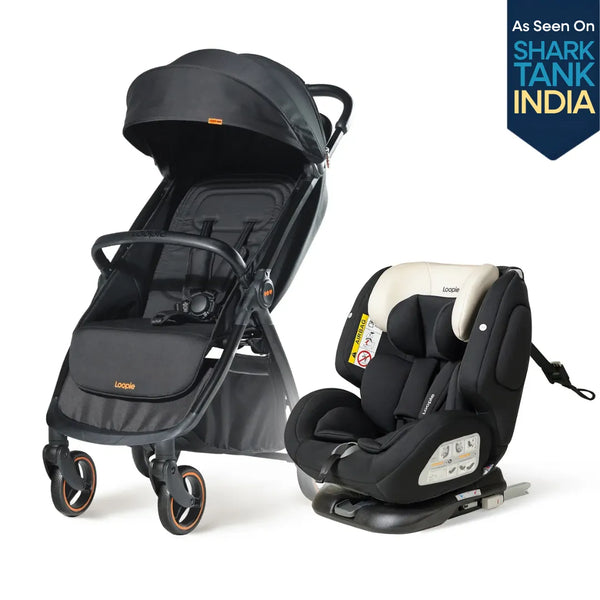
A ₹3,000 stroller and a ₹15,000 stroller both have four wheels, a seat, and a handle, but what you are really paying for is the frame that doesn't wobble, the wheels that survive Indian footpaths, the recline that's safe for a newborn, and a stroller that lasts all three years instead of eighteen months.
If you have started shopping, you've seen the whole range, from a baby stroller under 1000 rupees on a marketplace flash sale, all the way up to imported prams that cost more than a month's rent. It's confusing, and most "reviews" are paid placements. So let's do this honestly: what you actually get at each price, where the extra money really goes, and how much you genuinely need to spend.
What Does a Baby Stroller Actually Cost in India?
Baby stroller prices in India run from around ₹1,000 to well over ₹30,000. Broadly, they fall into tiers:
-
Under ₹1,000: very basic umbrella strollers, usually a lightweight seat and a frame, with few safety features.
-
₹3,000 to ₹5,000: entry strollers, better build, basic recline and harness, fine for short-term or second-stroller use.
-
₹7,000 to ₹15,000: the value sweet spot, proper safety certification, better frames and wheels, one-hand fold, true recline, made to last the full 0 to 3 years.
-
₹15,000 and above: premium and imported strollers, top-end materials, design, and features (and, with imported ones, a big chunk of import duty baked into the price).
The useful question isn't "what's cheapest?" It's "what lasts, keeps my baby safe, and is actually nice to use every day?" If you would rather see the tiers as features side by side, our compare-and-choose guide lays them out.
What About a Baby Stroller Under ₹1,000?
A genuinely safe, durable stroller brand-new for under ₹1,000 is very hard to find. At that price, you're usually looking at a basic umbrella stroller: a light frame, a simple seat, a small canopy, and little in the way of recline, padding, or safety certification.
For a very short-term, occasional-use, "keep in the car boot" second stroller, that can be okay. But as your baby's main stroller, for daily walks, naps on the go, and a few years of use, it usually isn't. The recline often isn't flat enough to be newborn-safe, the wheels wear quickly on rough roads, and there's rarely a warranty to fall back on. So if you're shopping under ₹1,000, it's worth knowing what you're trading away, and whether spending a little more will save you from buying a second stroller within the year. If you want to see what a step up looks like, you can browse the full Loopie range.
The ₹3,000 Stroller: What You Get
At around ₹3,000, you've stepped up to a real entry-level stroller. Expect a sturdier frame than the sub-₹1,000 options, a basic recline, a 5-point harness on the better ones, a canopy, and a storage basket. Many are reasonably light and fold down for storage.
What to check at this price:
-
Is the recline flat enough to be safe for a newborn, or only semi-upright (toddler-only)?
-
Is there a proper 5-point harness?
-
How do the wheels feel on an uneven surface?
-
Is there any safety certification and a warranty?
A ₹3,000 stroller is a fair choice for a second stroller, short-term use, or a tight budget. The trade-offs usually show up over time: smaller canopies, wheels that wear faster on bad roads, and a shorter overall lifespan.
Also read: How Wide Body Coverage in Car Seats Protects Your Baby
The ₹15,000+ Stroller: What You Get
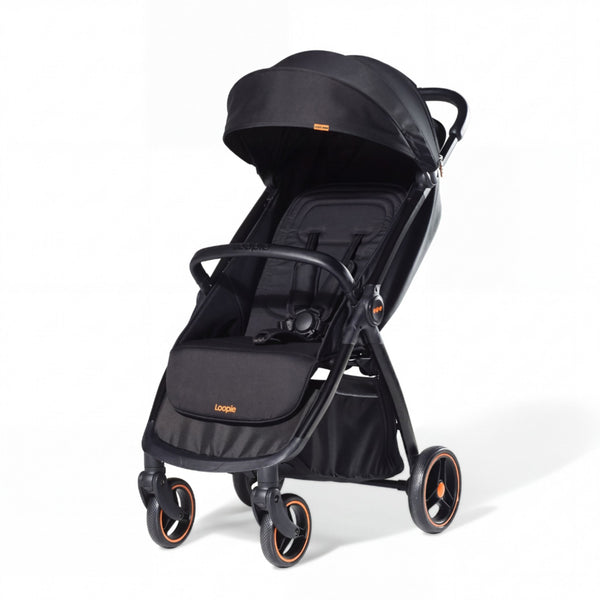
At ₹15,000 and above, you're paying for the things you don't notice until you use them daily. Expect a stronger, lighter frame (often aluminium), better wheels and suspension for real roads, a true flat recline that's newborn-safe, a smooth one-hand fold, a bigger UV-protective canopy, better fabrics, and recognised safety certification. With imported brands, a large part of that price is import duty and distributor margins rather than the stroller itself, which is worth knowing.
The point of a stroller at this level isn't luxury for its own sake. It's a stroller that stays comfortable and safe from newborn through toddler, handles Indian footpaths and travel, and is genuinely pleasant to push every single day, which is exactly what a design-led stroller like the Loopie Hop is built for.
₹3,000 vs ₹15,000: The Real Difference, Side by Side
|
What you're comparing |
₹3,000 stroller |
₹15,000 stroller |
|
Frame |
Basic, heavier or flimsier |
Stronger, often lightweight aluminium |
|
Wheels |
Wear faster on rough roads |
Better wheels, smoother on Indian footpaths |
|
Recline |
Often semi-recline (toddler-only) |
True flat recline, newborn-safe |
|
Harness |
Basic 5-point on better models |
Padded 5-point harness |
|
Fold |
Simple, sometimes two-handed |
Smooth one-hand fold, compact |
|
Canopy |
Small |
Large, UV-protective |
|
Safety certification |
Varies, sometimes none |
Recognised standard (e.g. EN 1888) |
|
Lifespan |
Often 12–18 months |
Full 0–3 years and beyond |
|
Warranty & support |
Limited or seller-mediated |
Direct brand warranty |
The headline difference: a ₹3,000 stroller often gets you through the early months; a ₹15,000 stroller is built to last the whole journey.

Where Does the Extra Money Actually Go?
It's a fair question, and the honest answer is that most of it goes into things you feel over time, not flashy extras:
-
Safety engineering: a frame, brakes, and harness tested to a real standard, plus a recline that's genuinely safe for a newborn. Fabrics, OEKO-Tex certified, so what touches your baby's skin is tested safe too.
-
The frame and materials: lightweight aluminium that stays sturdy, better fabrics, better padding.
-
Wheels and handling: EVA rubber wheels that stay smoother over uneven terrain and wet surfaces, the difference between fighting your stroller on a footpath and gliding over it.
-
The fold, a true one-hand fold, matters enormously when you're holding a baby and a bag.
-
Longevity: a stroller that survives three years of daily use instead of needing to be replaced.
With imported premium strollers, though, a big share of the price is simply import duty and margins, not extra quality. That's why a well-made Indian or India-designed stroller, like those in the Loopie range, can match imported safety standards for less.
Cost Per Use: The Number That Actually Matters
Here's a better way to think about price than the sticker. A baby uses a stroller from around month 1 to month 36, roughly 35 months. So a stroller's real cost is its price divided by how long it lasts.
A ₹3,000 stroller that needs replacing in 18 months isn't really ₹3,000, it's ₹3,000 plus the next stroller. A well-made stroller you use for the full three years spreads its cost across every walk, nap, airport, and market run. Cheaper often turns out to be more expensive. That's the quiet maths most stroller "deals" don't mention.
So, How Much Should You Actually Spend?
For most Indian parents, the value sweet spot is a stroller that's properly safety-certified, built to last the full 0 to 4 years, and nice enough to use daily, without paying a premium that's mostly import duty. Going too cheap usually means buying twice. Going ultra-premium mostly buys brand cachet.
Budget honestly for your situation: if you need a light second stroller for the car, an entry model is fine. If this is the stroller your baby will live in for three years, it's worth investing in the frame, the recline, the wheels, and the certification, because that's what you'll feel every day, and it's the thinking behind the Loopie Hop.
Also read: Choosing Safe Stroller Fabric for Your Baby
Where the Loopie Hop Fits
The Loopie Hop is built for exactly this "buy once, use for years" thinking. It's engineered around everyday Indian parenting, from school runs and market trips to weekend travel and daily walks, and it's rigorously tested to meet EN 1888-2 European safety standards. It pairs a sturdy 6000-series aluminium frame with EVA rubber wheels, an effortless one-hand fold, a UV-protective canopy, a seat that adapts as your baby grows, and a mosquito net included with the stroller for Indian outdoors.
It sits in the considered-premium space, not the cheapest stroller on the shelf, and not an imported price tag inflated by duty, but a design-led stroller built to last the whole journey. If you'd like to see how it compares across features, our compare-and-choose guide lays it out, and you can browse the full Loopie range or find it at a store near you.
One Stroller, Many Miles
Price is the easiest thing to compare and the least useful on its own. What matters is whether a stroller keeps your baby safe, handles real Indian roads, folds when your hands are full, and lasts the whole journey. Sometimes the honest answer is a modest stroller, and sometimes it's worth spending more for one you'll rely on every day for years.
Because the price is just a number. It's the next three years of walks, naps, and journeys that really count.
Ready to see one in person? Find a Loopie store near you.
Frequently Asked Questions (FAQs)
Can you get a good baby stroller under ₹1,000?
Under ₹1,000, you'll mostly find basic umbrella strollers with limited recline, small canopies, and few safety features. They can work as a short-term or backup stroller, but for daily, long-term use, a slightly higher budget usually gives you far better safety, comfort, and lifespan.
Is a ₹15,000 stroller really worth it over a ₹3,000 one?
It depends on how you'll use it. A ₹15,000 stroller typically offers a stronger lightweight frame, newborn-safe flat recline, better wheels, a one-hand fold, a larger canopy, recognised safety certification, and a longer lifespan. For a stroller you'll use daily for three years, that difference is worth it. For occasional or second-stroller use, an entry model may be enough.
How much should I spend on a baby stroller in India?
For most parents, a stroller in the value sweet spot, properly safety-certified, built to last 0 to 3 years, and comfortable to use daily, offers the best balance. Going too cheap often means buying a second stroller; going ultra-premium mostly adds brand cachet or import duty.
Why are imported strollers so expensive in India?
A large part of an imported stroller's price is import duty and distributor margins added on top of its overseas retail price, not extra quality. That's why a well-made Indian or India-designed stroller can meet the same safety standards for less.
What safety certification should a baby stroller have?
Look for a recognised standard such as EN 1888 (European) on the stroller. The Loopie Hop, for example, is tested to meet EN 1888-2. Certification, along with a true newborn-safe recline and a 5-point harness, matters more than any single feature.