Most parents buying a car seat focus on the harness, the recline positions, and how easy the installation process is. That makes complete sense. But there's one feature that often gets overlooked in the checklist: how much of your baby's body the seat actually wraps around.
Wide-body coverage in car seats refers to how effectively the seat surrounds and supports a child's body, not just from the front, but from the sides. It's the difference between a seat that restrains and a seat that truly protects.
On Indian roads, where sudden braking, sharp turns, and unexpected lateral movement are part of daily driving, this distinction matters more than most parents realise. This blog breaks down what wide-body coverage actually is, how it works, and why it's worth understanding before you buy.
This blog is for general informational purposes. Always consult your paediatrician or a certified child passenger safety technician for personalised guidance.

What is Wide-Body Coverage in a Car Seat
Wide-body coverage goes beyond the overall width of a seat. It refers to how effectively the seat surrounds and supports a child's body through a combination of features: extended side wings, deeper side impact protection zones, a contoured shell, raised hip supports, and broader shoulder coverage.
Together, these elements create a larger protective zone around the shoulders, torso, hips, and upper legs.
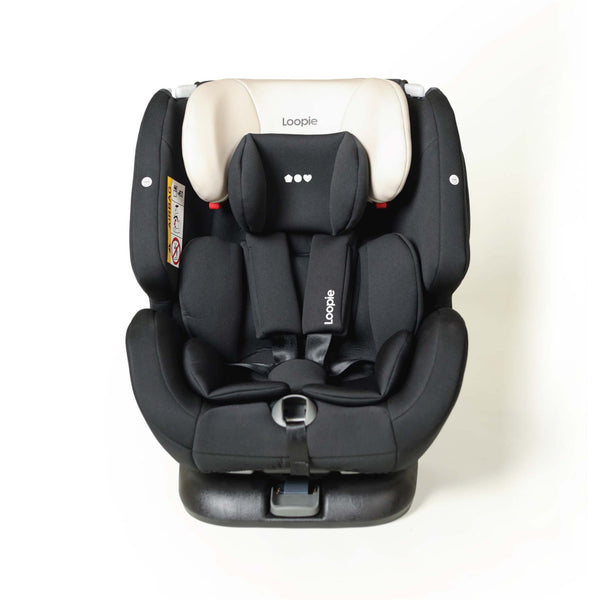
The padded side wings, sometimes called deep side wings or car seat side wings, are the most visible part of this system. They sit on either side of the baby's head and torso, forming what safety experts often describe as a protective cocoon. The wings are soft and cushioned, not rigid, which means they protect without compromising comfort.
A key thing to understand: visible wings don't automatically equal better protection. The depth of the wing, the materials inside it, and how it integrates with the overall seat structure all determine its efficacy. More on that below.
Why Side Impact Protection Matters
Frontal crashes get the most attention in car seat safety conversations. But side impact collisions are a significant and underappreciated risk.
A U.S. House Staff Report on booster seat safety found that side impact crashes account for approximately 25% of child vehicle fatalities. And within side impacts, the occupant seated nearest to the point of collision faces the highest risk: NHTSA crash surveillance data indicates that near-side occupants account for 55% of side-impact fatalities.
A Pediatrics study published on PubMed found that children seated in the front seat are 2.6 times more likely to be injured than those in rear seats during side collisions. Keeping your child in the back seat, rear-facing for as long as possible, remains the single most important decision you can make.

For Indian parents specifically, the road context adds another layer. Sudden speed bumps, sharp turns, vehicles cutting lanes, and unpredictable traffic patterns mean lateral forces on a vehicle are more frequent than in more regulated driving environments. A car seat designed with strong side impact protection is particularly relevant here, not as a premium upgrade, but as a practical safety consideration.
Standard car seats are primarily engineered around frontal crash performance. Side impact protection requires a different design response, and that's exactly where wide-body coverage becomes relevant.
Also interested in reading a guide that covers every car seat group, the weight and age range each one applies to and how to choose a seat that keeps working as your baby grows? Read ourr blog on: Child Car Seat Groups Explained for Indian Parents.
How Wide Body Coverage Works
When a vehicle is struck from the side, the force travels laterally. In that moment, a baby's head, neck, and torso are the most exposed parts of the body. Wide-body coverage works by intercepting that force before it reaches the child.
Here's how the system functions:
Energy absorption: The side wings contain energy-absorbing foam that absorbs and dissipates force on impact rather than just compressing. HDPE (high-density polyethylene) foam, used in quality seat construction, is one such material — denser than standard EPS, it manages crash energy more actively on contact.
Other commonly used materials include EPS (expanded polystyrene) and EPP (expanded polypropylene), as detailed by Mommyhood101's infant car seat safety guide. EPS foam compresses on impact to absorb crash energy; EPP foam offers multi-zone absorption and better recovery. All three materials significantly reduce the force transmitted to the child's body.
Force distribution: Rather than allowing crash energy to concentrate at one point, the wide wing structure spreads that force over a larger surface area, as documented in a Medical Science Discovery study on child restraint systems. This reduces the peak impact load on any single part of the body.

Containment: The wings act as a physical barrier between the baby's head and the vehicle's interior door panel. Without this barrier, a side impact can cause the head to make contact with hard interior surfaces, which is a primary mechanism for head injury in lateral crashes.
Structural integrity: Mommyhood101's car seat safety guide also notes that a steel-reinforced frame underneath the seat shell prevents the seat from collapsing or flexing under impact load, keeping the entire protective system intact when it matters most.
Rear-facing position: This is worth emphasising separately. A peer-reviewed study published in Accident Analysis and Prevention via ScienceDirect confirmed that rear-facing car seats distribute crash load over the entire back surface of the body, which is the most efficient design for protecting the head, neck, and spine. Wide-body coverage complements rear-facing positioning; it doesn't replace it. Used together, they address impact from multiple directions.
The wings are also designed to be soft and cushioned on the surface so that babies can lean into them comfortably during long drives or naps without any discomfort.

Side Impact Protection: What the Research Shows
The evidence for wide-body coverage as a meaningful safety feature is consistent across multiple studies.
Research from the Children's Hospital of Philadelphia, published via ScienceDaily, found that high-back seats with side wings provide a 70% reduction in injury risk in side-impact crashes compared to seat belts alone.
A peer-reviewed study published in Pediatrics via PubMed found that high-back booster seats with side protection provide a 58% overall reduction in injury risk for children aged 4 to 8 in side-impact crashes.
A study published in PMC by the National Institutes of Health found that proper car seat use reduces infant crash fatality risk by approximately 71% compared to seat belts alone. Wide-body coverage adds a meaningful protective layer on top of that baseline.
The same research also confirms that a Pediatrics study indexed on PubMed found the centre rear seat to be statistically the safest seating position in side-impact crashes, since it places the most distance between the child and either side of the vehicle. If your car setup allows it, this is worth factoring into your seating choices.
What Indian Parents Should Know Before Buying
Understanding the feature is one thing. Knowing how to evaluate it at the point of purchase is another.
Not all side wings are equal. A seat can have wings that look substantial but offer limited actual protection if the foam inside is low-density or the depth of coverage is shallow. When researching, look for seats that specify EPP or HDPE foam in the wing construction and that detail the depth of side coverage, not just the presence of wings.
It works as a system, not in isolation. Wide body coverage delivers the most protection when combined with:
-
Rear-facing positioning, which handles frontal and lateral crash forces on the spine and neck.
-
A 5-point harness, which distributes crash forces across the chest, shoulders, and hips.
-
An adjustable headrest that keeps the baby's head positioned within the wing coverage zone as they grow.
-
A steel-reinforced frame that keeps the seat structure intact under load.
Rear-facing remains the priority. Mayo Clinic's car seat safety guide and the National Association of Neonatal Nurses both recommend keeping children rear-facing for as long as the seat allows. Wide-body coverage is an important additional layer, not a substitute for this.

For Indian roads specifically, car seat safety features like deep side wings, energy-absorbing foam, and a strong frame aren't extras reserved for premium buyers. They're practical considerations for the driving most families do every day.
You can also check our guide on car seat safety where we talk in length about certifications, usage tips and common mistakes to avoid while purchasing a car seat in India.
Loopie Lap Car Seat: Wide Body Coverage Advantage
Loopie designed the Lap with Indian road conditions specifically in mind — the lateral forces, the sudden speed bumps, the sharp turns that are part of everyday driving across the country.
The seat features deep, wide wings that extend around the baby's head and torso, creating a secure, enveloping fit. The wings are padded and soft, so the protective structure and the comfortable one are the same. Babies can rest against them on longer journeys without any pressure points.
The shell is built from polypropylene, rigid and lightweight, with HDPE foam lining that absorbs and dissipates force on impact rather than just blocking it. It's the same principle covered earlier — energy that gets absorbed doesn't reach the child.
The wider body coverage on the Lap goes beyond the wings. Extended side protection, a contoured shell, raised hip supports, and broader shoulder coverage work together to create a larger protective zone around the shoulders, torso, hips, and upper legs. The 5-point harness works with this structure to keep the baby securely positioned within it.
The adjustable recline, available across five positions, ensures the head stays naturally within the wing coverage zone from the newborn stage onward. A body support cushion and head cushion provide additional fit for younger infants.
FAQ: Parents’ Most Asked Questions on Wide-Body Coverage
What is wide-body coverage in a car seat?
It refers to how effectively a car seat surrounds a child's body from the sides, using extended side wings, deeper impact protection zones, a contoured shell, and broader shoulder and hip coverage. It creates a larger protective zone around the torso, shoulders, and head.
Do car seat side wings really work?
Yes, when properly designed. Research from the Children's Hospital of Philadelphia shows high-back seats with side wings reduce injury risk by 70% in side-impact crashes compared to seat belts alone. The key is the quality of materials and depth of coverage, not just the presence of wings.
Is wide-body coverage worth it for Indian roads?
Yes. Lateral forces from sharp turns, speed bumps, and unpredictable traffic are common in Indian driving conditions. A seat with strong side impact protection is a practical safety consideration, not just a premium feature.
How does wide-body coverage work with rear-facing positioning?
They complement each other. Rear-facing seats distribute crash load across the entire back surface, protecting the head, neck, and spine. Wide-body coverage adds lateral protection. Together, they address the impact from multiple directions.
What materials should I look for in car seat side wings?
EPS or EPP foam in the wing structure. EPS foam absorbs crash energy on impact; EPP foam offers more advanced multi-zone absorption. Both are significantly more protective than seats without foam-lined wings.
Is the centre rear seat safer for my baby?
Research published in Pediatrics confirms that the centre rear seat is statistically the safest position in side-impact crashes. If your car and seat installation allow it, it's worth considering.
To Safer & Smoother Family Adventures
Wide-body coverage isn't a buzzword. It's a design principle, one that addresses a real and underappreciated crash risk: lateral impact.
The combination of deep side wings, EPS or EPP foam, rear-facing positioning, and a 5-point harness gives a baby protection from multiple directions. Each element does its part, and together they create something much stronger than any single feature alone.
Buying a car seat is one of the most important decisions a parent makes for their child's safety. Understanding what the features actually do, beyond the checklist and the marketing, is the best way to make that decision with confidence.
And if you're still sorting through the options, that's okay too. Take your time, ask questions, and know that paying attention to these details already puts you ahead.