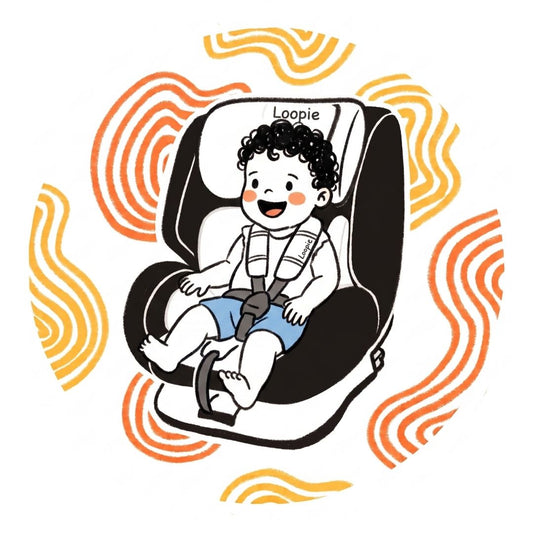
If you have ever knelt in the back of your car, threading a seat belt through a car seat, tugging it tight, and still wondered, "is this actually safe?", you are not alone. That doubt is exactly the problem ISOFIX was built to solve. It turns a fiddly, easy-to-get-wrong job into a simple click.
Here is what ISOFIX means, how it works, and how to tell if your car already has it.
ISOFIX is a standard set of metal anchor points built into your car that let a compatible car seat lock straight onto the car's frame, no seat belt needed. It is quicker to fit, much harder to fit wrong, and holds the seat more firmly in a crash.
Quick facts
-
ISOFIX comes from ISO (the International Organisation for Standardisation) plus "Fix", often written out as "International Standards Organisation Fix".
-
It's a set of two anchor points hidden in the gap of your back seat, plus usually a third connection (a top tether or a support leg) to stop the seat tipping forward.
-
Most modern cars sold in India now come with ISOFIX points.
-
The big win is safety through simplicity: far fewer seats end up installed incorrectly.
What is ISOFIX?
ISOFIX is an international standard for how a child car seat attaches to a car. Instead of relying on the adult seat belt, the car has two sturdy metal bars built into its frame, and the car seat has two matching connectors that clip onto them. Because it is a shared standard, an ISOFIX seat will fit any car with ISOFIX points, no guesswork about belt lengths or awkward buckle positions.
You'll also hear it called child seat anchor points, ISOFIX mounts, or ISOFIX child seat anchorages. Same thing, different words. Some people just call the whole setup a "baby car chair with ISOFIX". However it is phrased, it all points to that click-in connection.
A little history if you are curious: the evolution of baby car seats through the years shows just how far we've come from the early days.
What is an ISOFIX car seat?
An ISOFIX car seat is simply a car seat with two built-in connectors that latch onto your car's ISOFIX anchor points. Some seats clip on directly. Others sit on an ISOFIX base that stays in the car, so you can lift the baby seat on and off with a click when you are dashing from the car to the café.
Either way, you get a rigid, direct link between the seat and the car's body, rather than a seat held on by a belt that can loosen over time.
Read this complete guide on child car seat groups and how to pick the right fit for your baby, so you know which stage your seat needs to cover.
How does ISOFIX work?
There are three parts to it:
The anchor points. Two metal bars welded into the car's frame, tucked into the "bight" of the back seat (the gap where the base cushion meets the backrest). They are usually hidden but easy to reach.
The connectors. Two arms on the car seat that push in and lock onto those bars. You'll normally hear a click and see a green indicator when each side is secure.
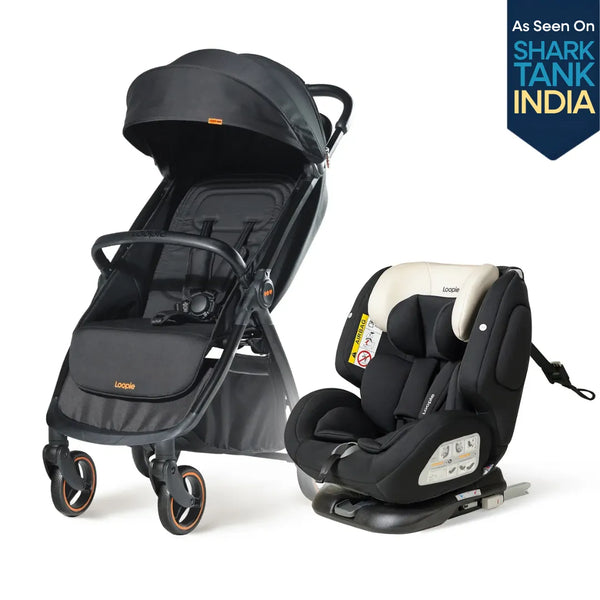
The third point. A frontal crash can make a seat rotate forward, so ISOFIX seats add a way to stop that. Depending on the seat, it is either a top tether (a strap that hooks to an anchor point behind or below the car seat) or a support leg that braces down to the floor. Loopie's own car seat uses ISOFIX with a top tether for exactly this reason.
Fitting it takes seconds: line up the connectors, push until they click, attach the tether or drop the leg, done.

Why is ISOFIX safer?
Here's the part that matters most. Studies of car seats out in the real world keep finding the same thing: a large share of belt-fitted seats are installed wrong in some way, too loose, wrong belt path, twisted. And a seat that isn't tight can't protect the way it is meant to.
ISOFIX takes most of that human error off the table. The connectors only lock one way, so if you hear the click and see green, it is on properly. The rigid connection also means the seat moves less in a sudden stop or crash, keeping your child closer to the seat's own protection. Quicker to fit, harder to get wrong, and steadier when it counts.
Even with ISOFIX, small slip-ups happen.
Also Read - 5 car seat mistakes most parents make, and how to avoid them.
Do Indian cars have ISOFIX?
Mostly, yes. ISOFIX points are now standard on most modern cars sold in India, from hatchbacks to SUVs, and child restraints are covered under AIS-072, India's official standard for child seats. Older or very entry-level models may not have anchor points yet, so it's worth a quick check before you buy a seat.
This is also why a good ISOFIX seat in India is one that is built for local cars. A seat designed and tested for Indian vehicles and roads will simply fit and behave better here than one that assumes a different car shape.
Weighing up your options?
Here is our roundup of the safest car seats in India in 2026.
How to check if your car has ISOFIX
Two easy ways:
-
Feel for the bars: Press into the gap between the backrest and the base cushion of your rear seat, usually the two outer seats. If your car has ISOFIX, you'll find two small metal loops there. Many cars also mark the spot with a little seat-and-child symbol on the upholstery.
-
Check the manual: Your car's handbook will list the ISOFIX positions and where the top-tether anchor is (often behind the seat, on the parcel shelf, or on the floor).
If you find the anchor points, you are ready for an ISOFIX seat.

Choosing an ISOFIX car seat
Once you know your car is ready, look for a seat that ticks these off:
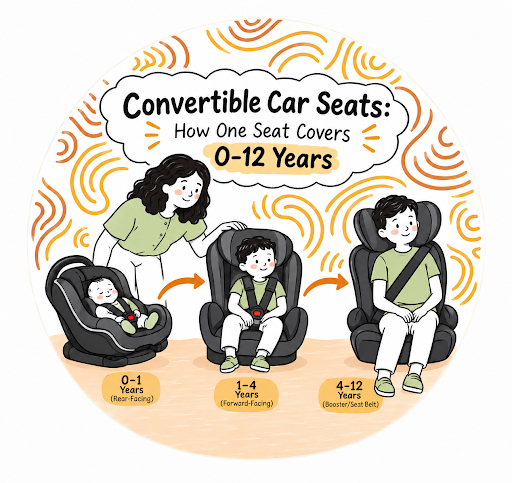
Safety certification, so you know it has been crash-tested to a recognized standard. A third anchor, either a top tether or support leg, for that anti-rotation protection. Side-impact protection, since side hits are some of the most dangerous. And ideally a convertible design that grows with your child, so one seat covers you for years instead of buying every stage again.
That last point saves real money over time, and a lot of hassle.
New to all of this?
Start with what to look for when buying a stroller and car seat in India.
Meet the Loopie Lap
This is exactly what we built the Loopie Lap convertible car seat for.
It is R44 safety certified and can be installed two ways, using ISOFIX with top tether, or with the car's seat belt, so the Loopie Lap is suitable for all cars, including Indian models.
It also grows with your child, from the early days to the big-kid school run, with a 360-degree rotating seat (no more twisting yourself in half to buckle them in), multiple recline positions, and side-impact protection built in. One seat, sorted for years.
You can see how it compares with the rest of our range on the compare and choose page, browse all our car seats here, pick up the Hop and Lap bundle if you need a stroller too, or try the Lap in person through our store locator.
The bottom line
ISOFIX takes the guesswork out of one of the most important things you'll ever install: the seat that holds your child on every drive. It clicks in, it is hard to get wrong, and it holds firm when it matters. If your car has the anchor points, an ISOFIX seat is one of the simplest upgrades you can make to everyday safety.
When you are ready, the Loopie Lap is built to click straight into your Indian car and grow with your little one for years to come.
Frequently asked questions
What is ISOFIX in a car?
Two metal anchor points built into the car's frame, in the gap of the back seat, that a compatible car seat clips onto directly, without using the seat belt.
Is an ISOFIX car seat safer than a seat-belt one?
It's much harder to install incorrectly, and a correctly fitted seat is what keeps your child safe. ISOFIX also holds the seat more rigidly, so it moves less in a crash.
Do all cars in India have ISOFIX?
Most modern cars do, but some older or entry-level models don't. Feel for the two metal loops in your rear seat gap, or check your car manual, before buying a seat.
Does my ISOFIX seat still need a top tether?
If your seat uses a top tether (like the Loopie Lap), yes, attach it every time. It stops the seat from tipping forward in a frontal crash. Some seats use a support leg instead.
Can I move an ISOFIX seat between cars?
Yes, as long as both cars have ISOFIX points. That's part of the appeal; it clicks out of one and into another in seconds.