The safest place for a child car seat is the back seat, but which side is safer, and can you place it in the rear middle seat?
This guide explains where a child car seat should go in a car, why the back seat is safest, and what to do when the ideal spot does not suit your car. Maybe you are setting up a seat before a newborn comes home, welcoming a second child, or moving from an infant seat to a bigger one. Every car is a little different, so a clear starting point helps.

Key Takeaways
-
The back seat is the safest place for children, away from the front of the car.
- The rear middle can be the safest on paper, but only if the seat fits tightly there.
-
A secure fit matters more than a “perfect” position.
-
A rear-facing seat should never face an active front airbag.
-
Check your car seat manual and your car’s owner’s manual before installing.

What Is the Safest Position for a Child Car Seat?
The safest position for a child car seat is the one that keeps your child away from the front of the car and allows the seat to be installed tightly and correctly.
HealthyChildren advises that the back seat is the safest place for every child younger than 13. It adds that the best spot is wherever the seat installs tightly, which can be the middle or either side.

So the child car seat position in your car comes down to two zones: the rear middle, the rear sides, but never the front seat. For newborns, the same logic holds. The safest car seat position for infants is the back seat in rear-facing mode, at the recline angle shown in its manual. That is the simplest answer to where to place a baby car seat.
Car Seat Positions at a Glance
|
Position |
Best when |
Watch out for |
|
Rear middle |
|
Lap-only belt (no shoulder strap), narrow or contoured seat |
|
Rear, behind front passenger |
Often the easiest kerb-side door |
Needs a tight install |
|
Rear, behind driver |
When you have a designated parking spot |
Needs a tight install |
In India, which follows left-hand traffic and mostly uses right-hand-drive cars, the seat behind the front passenger is often the kerb-side (sidewalk) position. The kerb-side car seat loading keeps your child away from passing vehicles.

How Does Seat Position Affect Crash Protection?
Position decides how far your child sits from the main crash forces. Installation decides how well the seat holds in a crash. Safety comes from getting both right.

Why Is the Back Seat Safer?
The back seat keeps your child farther from the dashboard, the windshield, and the front of the car, where many crashes begin. Car seat installation in the back seat also keeps a deploying front airbag well away from the seat.
Installation is where many families can gain the most. Checking both your vehicle and baby car seat manuals before every new installation is time well spent.

Here are some of the benefits of choosing this position:
- Less exposure to crash forces: your child sits farther from the front and, in the middle, from both doors.
- No airbag risk: a rear seat keeps a rear-facing seat well away from a front airbag.
- A firmer installation: the rear passenger seats offer either ISOFIX anchor points or seat belt installation
- Easier loading: a kerb-side seat means less time next to moving traffic.

Should You Consider the Rear-Middle Position?
The rear middle sounds like the perfect spot because it is the farthest point from both doors, so it protects your little one from side impacts & collisions. But in many Indian cars, it does not work well. Here is why:
-
The belt is often too basic. Many middle seats have only a simple lap seat belt, and most car seats need the full lap-and-shoulder belt for installation
-
An armrest gets in the way. A fixed or folding armrest can stop the seat from sitting flat.
-
ISOFIX is often missing. Many cars do not offer ISOFIX anchors in the middle.
-
The bench is narrow or humped. The seat can rock or tilt instead of sitting steady.

Petar Jovanovic, Head of Product Management at Osann, a child car seat and stroller manufacturer and one of Loopie’s manufacturing partners, says the safest position is always the one where the seat can be installed correctly and securely. In many vehicles, he notes, the middle seat lacks ISOFIX points or a suitable three-point belt, and its shape can make a stable fit difficult.
Before choosing between the middle and a side seat, he suggests three checks: whether the carmaker allows a child car seat in that position, whether the seat can be installed securely with ISOFIX or the seat belt as its manual describes, and whether it stays stable once fitted.
He shares: “A correctly installed child car seat on an outer rear seat is safer than an incorrectly installed child car seat in the middle.”

The label warns against placing a car seat in the front passenger seat due to an active airbag
Can a Child Car Seat Go in the Front Seat?
No. A child car seat should never go in front of an active airbag, and the back seat is the safest place for every child younger than 13. A rear-facing seat sits with its back towards the dashboard. If the airbag inflates, it strikes the back of the seat with strong force, right where your baby’s head rests. In the back seat, your child stays well away from that zone.
You've read about the safest position, but learning how to install the car seat is equally important. So, let's dive into it in detail.

Car Seat Installation Check
1-Inch Test:
-
Hold the car seat at the belt path, where the seat belt or ISOFIX strap passes through.
-
Try to move it side to side and front to back.
-
If it shifts more than about 1 inch (2.5 cm), tighten it again.

Petar says the most common mistake is assuming a seat is installed correctly just because it looks firm. ISOFIX connectors may not be fully locked, or the belt may not be routed and tightened properly. Even a perfectly fitted seat cannot protect a child who is not harnessed correctly.
His advice for every journey: “Never assume that yesterday’s installation is automatically safe today. Take a few seconds before every journey to check that both the seat and your child are properly secured.”

Always check that the lock is secured safely.
In practice, this quick pre-trip check covers four things:
- The seat is securely installed, and every locking indicator shows the correct status.
- ISOFIX connectors, the support leg, or the Top Tether are secured, where they apply.
- The harness is snug and sits flat, with no twists.
- For older children using the vehicle’s three-point belt, the lap belt runs low across the pelvis, and the shoulder belt sits across the shoulder and chest.

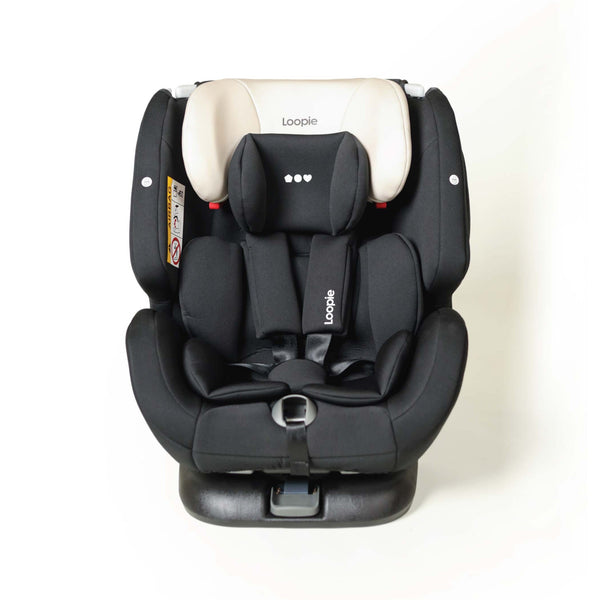
Flexibility helps too. We designed the Loopie Lap car seat to be installed with ISOFIX or a seat belt, so it can work in cars with and without ISOFIX points.
Remember, this is general information, not medical, legal, or professional installation advice. Your car seat manual and your car’s owner’s manual always have the final say, and a trained installer is a good friend to have.
FAQs: Parents’ Most Asked Questions About Car Seats
When can my child use only the adult seat belt?
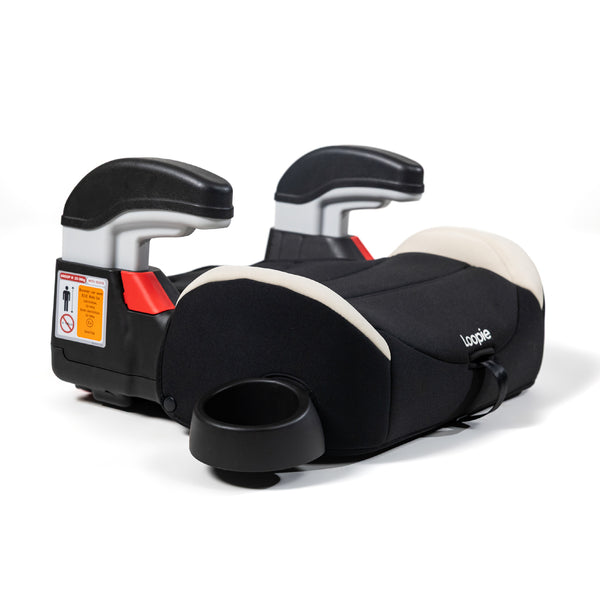
Not by age alone. A child is generally ready to use only the adult seat belt when they are at least 4 feet 9 inches tall, and the belt fits correctly: the lap belt sits low across the upper thighs, and the shoulder belt crosses the chest and shoulder, not the neck or abdomen. Until then, an appropriate child restraint or booster seat is generally the better fit.
Can I use ISOFIX and the seat belt together?
Follow your seat manual. Many seats use either ISOFIX or the belt, while some modes combine ISOFIX with a belt. The installation table in the manual shows what suits each stage.
What if my car has no ISOFIX?
You can still use a car seat if it is approved for seat-belt installation. Check both the car-seat manual and vehicle owner’s manual, then make sure the seat is tightly secured at the belt path.
How often should I check the installation?
Do the 1-inch test whenever you install the seat in a new car or position, and give it a quick shake before longer trips. If it moves more than about an inch at the belt path, tighten it again.
Here’s to Safe & Happy Rides!
The back seat comes first. Within it, the rear middle can be the safest choice when the seat fits tightly, and in many Indian cars, a well-installed rear side seat is the practical answer. Rear-facing seats stay away from active front airbags, and both manuals guide every decision. So where should a child car seat go in a car? Wherever it fits your child, your car, and your routine, and sits firm.
Every car is different, and getting this right is something to feel good about. To see how an ISOFIX or belt seat could fit your car, take a look at the Loopie Lap. For more on choosing and using a seat, read Loopie’s baby car seat guidelines every parent needs to know.