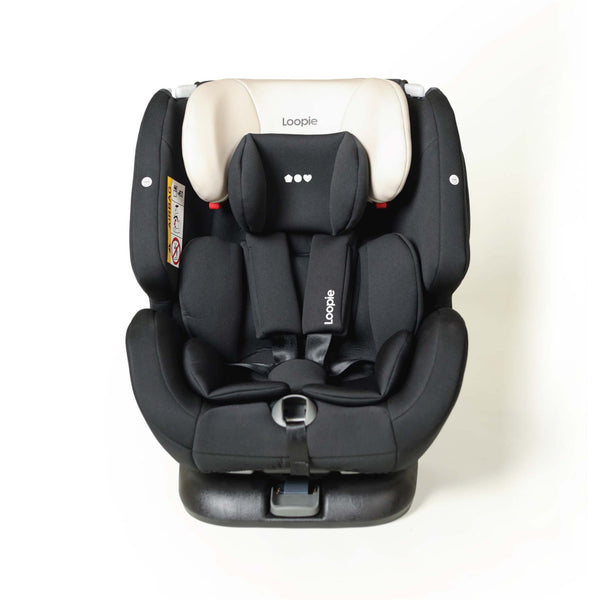
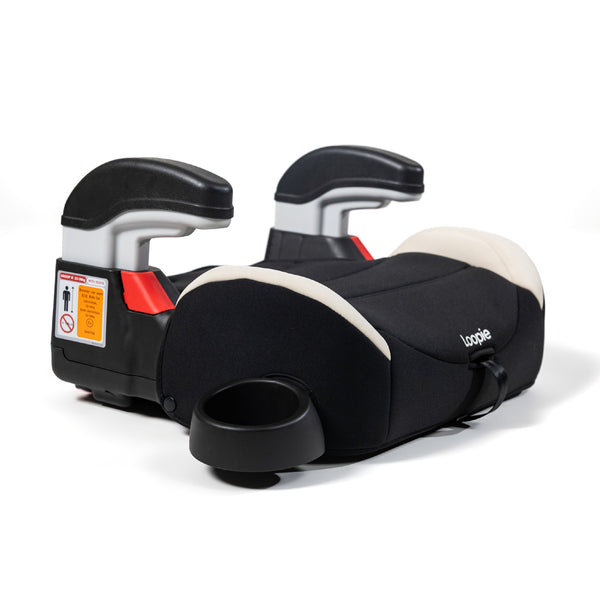
This guide explains how to choose, fit, and install a baby car seat in India: what the law says, how to read a seat's label, how ISOFIX and seat belt installation work, and the checks that make every drive safer. From the first ride home to a quick trip to the doctor, a car seat is a part of almost every early journey, so it helps to know what a good setup looks like.
This read is for new parents and families buying their first car seat. It works best when it comforts the child, suits the car, and is installed appropriately. Each section below takes care of these factors.

Is a baby car seat mandatory in India
Yes, for most passenger cars made on or after 1 October 2014. Rule 138(6) of the Central Motor Vehicles Rules, 1989, as reproduced by Commercial Law Publishers, asks drivers to seat any child up to twelve years in an appropriate child restraint system that conforms to AIS:072-2009. It excludes transport and special purpose vehicles.
A second provision adds to this. Section 194B(2) of the Motor Vehicles Act, as quoted in the Center for Environment Education's analysis of road safety legislation for children, provides for a ₹1,000 fine when a child under 14 is not secured by a seat belt or a child restraint system.

The need for child restraints has also been raised at the national level. At the launch of a 2019 report on rear seat belt use and child road safety, Union Road Transport Minister Nitin Gadkari cited a survey in 11 major cities, in which nine out of ten did not secure children with seat belts in four-wheelers or ensure helmets on two-wheelers, and described implementation of road safety as a failure for his department.
Shri Nitin Gadkari, in a press conference for the return of the Sadak Suraksha Abhiyan (SSA) 2026, states, “If we shape children into responsible citizens early, safety becomes a lifelong habit.” Real road safety doesn’t begin with speed limits or signboards. It starts at home through values, discipline, and respect for life. When children learn safety early, it becomes instinctive, and that is how we create safer roads.

These car seat rules for children are not meant to worry anyone. They point to one easy habit: a child is secured properly on every ride, short or long. Three things make that habit work:
-
Right for the child: the seat is appropriate for the child's weight and height.
-
Right for the car: the seat is appropriate for the vehicle and the seating position.
-
Installed correctly: the seat is fitted exactly as the manual describes.

Choosing the right seat for your child
Car seats are matched to a child's size, not just age. National Highways & Infrastructure Development Corporation Ltd (NHIDCL), the highways development company that works under the Ministry of Road Transport and Highways, has also urged parents on X to use an "appropriate car seat or booster seat according to their age and size".

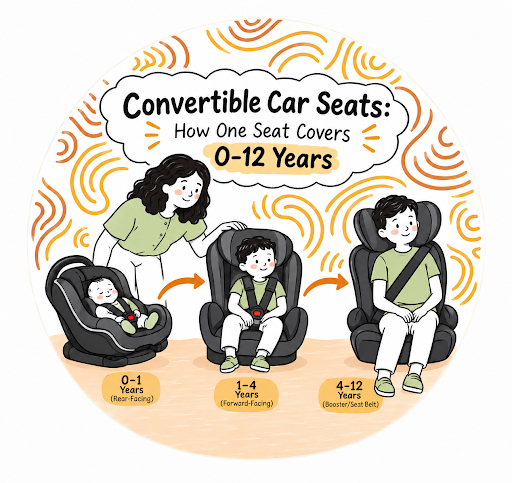
A newborn, a toddler, and a primary schooler each need a different setup. The Mahindra XUV700 owner's manual, section 2.4 of the Child Restraint System (CRS), lists five weight groups that many seats follow:

Every seat has its own limits, so the manual that comes with it has the final say. Tata's Safari owner's manual follows the same stages: rear-facing for children under one year, a harnessed forward-facing seat after that until the seat's size or weight limit, and a booster once the child outgrows it.

How long should a baby stay rear-facing?
For as long as the seat’s own limits allow. Weight and height decide when to change direction, not a birthday. Seats approved under R44 can turn forward-facing from 9 kg, often somewhere between 9 and 12 months, while R129 (i-Size) seats keep babies rear-facing until at least 15 months.
Both figures mark the earliest point to turn, not a target. Chicco’s listing for its Unico Evo i-Size seat, for example, calls rear-facing mandatory until 15 months and 76 cm, and recommends continuing until 87 cm, roughly the height of an average two-year-old, for better head protection. The Loopie Lap allows rear-facing up to 18 kg when installed with ISOFIX and Top Tether, so there is room to wait.

Can a baby sit in the front seat with an airbag?
No. A rear-facing seat must never be placed in front of an active airbag. The Loopie Lap manual warns this may result in death or serious injury. For every child seat, the rear seat is the recommended place, and Maruti Suzuki’s Grand Vitara manual also advises seating a child in the back whenever possible.
When can a child use an adult seat belt?
When the belt fits the child properly. Maruti Suzuki's Grand Vitara manual notes that its belts suit adult-sized occupants and advises a child restraint system in the rear seat if the shoulder strap rests on the child's neck or chin, or the lap belt does not sit securely on the hips.

A booster seat helps here, which is why the XUV700 manual pairs it with the seat belt for groups II (15 to 25 kg) and III (22 to 36 kg). Getting this stage right feels easier once you know what to look for.
How to read a car seat label
Standards sound technical, yet the label tells a simple story. It shows what the seat has been approved for, and the manual explains how to use it.

What is AIS-072 certification?
AIS-072 is India's technical standard for approving child restraint systems, published in April 2009. It sets testing and approval requirements. ARAI's published AIS-072 standard document is a technical text, not a parenting guide, so the seat's own label and manual still show its approved size range.
ECE R44 is an international framework that classifies restraints by weight group, the same groups in the table above. Tata's Safari manual advises choosing a restraint that complies with AIS-072 or ECE R44, and checking that the child fits properly.

A certification label is a helpful starting point. It does not mean:
-
The seat is installed correctly.
-
The seat fits every car.
-
The harness is adjusted properly.
-
The seat is automatically "the safest".
Even a certified seat cannot check how snug the harness is on the day. Petar Jovanovic, Head of Product Management at Osann (an organisation specialising in child car seat and stroller manufacturing), also a manufacturing partner of Loopie, advises fastening it carefully, never so loosely that a child can slip their arms or shoulders through.

Why Loopie chose R44 for the Lap
The Loopie Lap car seat has ECE R44/04 homologation, the formal approval a seat earns under that standard. Two technical reasons shaped our choice:
One seat for cars with and without ISOFIX
Many R129 (i-Size) seats are built mainly for ISOFIX. This works well in Europe, where ISOFIX became mandatory on new cars around 2013–2014. In India, cars with and without ISOFIX are still common.
R44 seats can be approved for both seat-belt installation (universal) and ISOFIX (semi-universal). This is why the Lap manual lists both methods.

Room for real-life use
As covered above, R129 requires rear-facing until at least 15 months, while R44 allows a seat to be turned forward-facing from 9 kg (roughly 9 to 12 months for many babies). This means R129 strictly does not allow switching to forward-facing before 15 months. In contrast, the Loopie Lap car seat (under R44) lets you switch safely to forward-facing mode from 9 months onwards.
Both are safe, but we also looked at how car seats are actually used in India. Awareness of car seat safety is still growing, so the Lap is designed to fit real-life habits while encouraging parents to follow the guidance for their child’s size.
Many families like to keep a baby in sight and within reach, with a parent glancing back, or a grandparent or aunt sitting alongside to talk and play.

That mix makes R44 a good fit for Indian conditions today. The aim was a seat that works for Indian families without losing sight of what matters most: keeping little ones protected on every journey. Both R44 and R129 are recognised international approval frameworks, and the right seat is the one that suits your child and your car, installed correctly.
Built-in side impact protection
R44 does not include a side impact test, so we added side impact protection to Lap’s design.
Interested in reading more about safety certifications? Check out our blog on baby product safety certifications in India.
Making sure the seat suits your car
ISOFIX is a standard way to attach a compatible child seat to fixed anchor points in the car. The XUV700 manual describes lower anchors at the bottom of the rear seats, where the seat's connectors click in. It is an attachment system, not a certification. For a closer look, Loopie's guide to ISOFIX car seats for Indian parents walks through it step by step.

A Top Tether is an extra strap that helps limit movement. The XUV700 manual calls it a supplementary anchor to use after the ISOFIX connectors are engaged. It also says to attach it only to the vehicle's designated tether anchor, because a different fixture may not work properly.
Many seats can also be installed with the car's three-point seat belt. The seat's manual shows the exact belt path, and the belt needs to be tight and untwisted.

Is ISOFIX safer than a seat belt?
The safest method is the one both the car seat manual and the vehicle manual allow, installed correctly. ISOFIX can make installation simpler because the seat clicks into fixed anchors. A correctly fitted seat belt installation is also a valid method for seats approved for it.
An ISOFIX car does not automatically suit every ISOFIX seat, and approved seating positions can differ by car. Carmakers include child restraint guidance in their manuals:
|
Owner's manual |
What it covers |
|
Mahindra XUV700 |
ISOFIX lower anchors in the rear seats, Top Tether as a supplementary anchor, weight-group guidance. |
|
Tata Safari |
Child restraints recommended up to 12 years; install with a seat belt, ISOFIX, or ISOFIX with Top Tether where equipped. |
|
Maruti Suzuki Grand Vitara |
Rear-seat placement, how adult belts fit smaller children, warnings on airbags, doors and windows. |
Equipment and approved positions can vary by model, variant and year. ISOFIX or a three-point belt is the starting point; you still need to check the exact seating position and method. A few minutes with both manuals before the first drive makes every later journey easier.

How to install a child car seat correctly
The Loopie Lap shows how much installation can differ between seats. It rotates between rear-facing and forward-facing positions, and its manual lists the method for each stage. Rear-facing, it can use ISOFIX with a Top Tether. Forward-facing, it uses the car's three-point belt, with or without ISOFIX.

How to check if a car seat is installed correctly
Press the seat firmly into the vehicle seat, then rock it side to side and front to back. It should feel solid, with little movement. Indicators on ISOFIX connectors and the tether should show green where the seat has them, and the belt should be untwisted and routed through the marked guides.
A few more checks help:
-
The Loopie Lap's ISOFIX indicators turn green on both sides once connected.
-
Its tether indicator turns green once the strap is locked.
-
The headrest is adjusted so the shoulder belt sits free.

Petar explains that every Loopie Lap production run ends with a 100% final QC inspection. It covers appearance, functions such as rotation, headrest and seat position adjustment, the ISOFIX connectors, and a check that every part is in the box. That is the manufacturer's own check, so installation is the part that gets checked at home.
Can a car seat be used in a car without ISOFIX?
Yes, for seats approved for belt installation. Loopie Lap works in both ISOFIX and non-ISOFIX cars, using the car's three-point belt. One limit applies: belt-only rear-facing installation is for children up to 13 kg, so rear-facing beyond that needs ISOFIX with Top Tether. Always follow the manual's belt path.

Interested in reading about some of the best car seats for your child? Read our blog: Safest Car Seats in India.
Car seat mistakes parents make
Most mistakes are easy to fix once they are spotted.
|
Mistake |
Why it matters |
What to do instead |
|
Installing too loosely |
A loose seat can move more than it should. |
Tighten, rock-test, and recheck every few weeks. |
|
Wrong belt path or a twisted belt |
The belt may not hold the seat as designed. |
Follow the marked guides and keep the belt flat. |
|
Skipping the Top Tether where the seat needs it |
The tether helps limit movement. |
Attach it to the designated anchor and check the indicator. |
|
An unsuitable seating position |
Not every position is approved. |
Check both manuals; prefer the rear seat. |
|
Bulky clothing under the harness |
Thick layers can leave the harness loose against the body. |
Use thin layers and place a blanket over the buckled harness. |
|
Unapproved accessories or covers |
Seat parts work together; the Loopie Lap manual calls the cover part of its restraint performance. |
Use only items the manufacturer recommends. |
How long can a baby sleep in a car seat
Many parents ask this on longer drives, especially when a baby falls asleep mid-journey.
A general recommendation, according to Petar Jovanovic, is about two hours at most in a car seat, followed by a break. Regular stops let a baby stretch and change position. Car seats are made for travelling, not as a regular sleeping place, so move a sleeping baby to a flat surface once the journey ends.

Quick checklist before every drive
-
The seat is in the recommended position, in the rear seat.
-
The seat is fixed in the vehicle, even when empty.
-
ISOFIX indicators show green, if used.
-
The Top Tether is on the vehicle's designated anchor, if the mode needs it.
-
The belt is routed through the guides and untwisted.
-
The harness is snug, and the headrest is adjusted.
-
The child is within the seat's weight and height limits.
-
Clothing allows a close fit.
-
Loose items in the car are secured.
-
Everyone who drives the child knows the setup.
FAQs: Parents’ Most Asked Questions on Baby Car Seats
What should be done with a car seat after a crash?
Loopie's manual says to replace the seat if it has taken heavy loads in an accident. Check the manufacturer's guidance even if the seat looks fine.
Can a car seat stay in the car when no one is in it?
Yes, and it should stay fixed in place. Loopie's manual says the seat must stay fixed in the vehicle even when the child is not in it. Loose items in the car should be secured too.
How often should the installation be rechecked?
Every few weeks, according to Loopie's manual. Check buckles and adjusters, and look for cracks in plastic, frayed straps, or loose stitching.
Is it safe to hold a baby on your lap in the car?
No. Maruti Suzuki's Grand Vitara guidelines warn that even a tight hold cannot provide proper support in a collision. A child restraint system is the safer choice, even on short trips.
What is the expiration date of a car seat?
There is no expiry date for a car seat. However, you must follow the age, height & weight guidelines specified by your car seat manufacturer in the manual.
Getting it right, one drive at a time
A baby car seat works when it suits the child, suits the car, and is installed correctly. Certification matters, and so does fit. ISOFIX helps, and a correctly fitted seat belt installation works well too, where the seat allows it.
Before the next drive, read the seat manual, confirm the installation method for your car, and do a quick fit and harness check. Remember, this is general information. The manuals for your seat and car, and your paediatrician, can answer anything specific to your family. Small checks, made a habit, go a long way toward calm journeys.