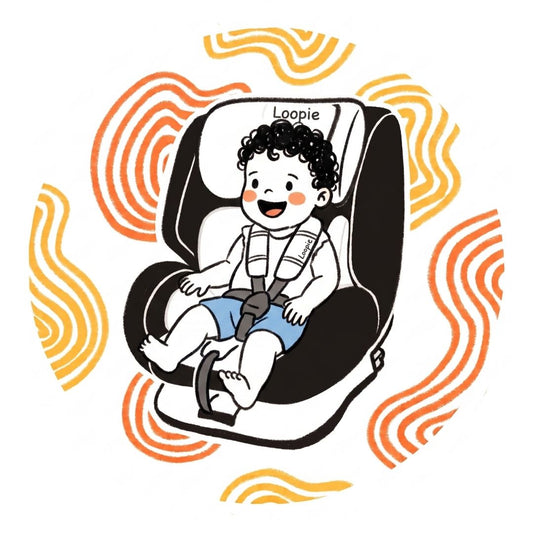
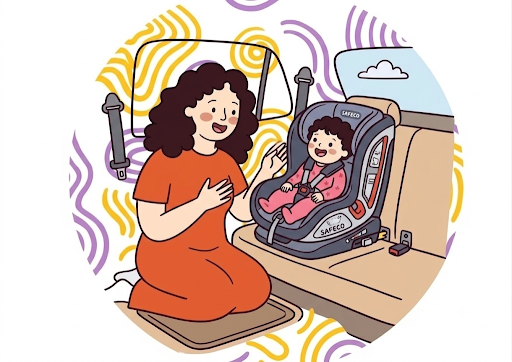
A convertible car seat is a single seat that adapts through every stage of your child's growth, from a rear-facing newborn to a forward-facing toddler to a booster-seated big kid, so one seat can safely cover the years from birth to around 12 (0–36 kg) without needing a replacement at each stage.
If you have started shopping for a car seat, you have probably noticed how quickly it gets confusing and expensive. Buy an infant car seat for the newborn stage, and you're replacing it within a year. Buy the next one, and the one after that. A convertible car seat solves that by growing with your child instead of being outgrown. This guide explains exactly how one seat manages to cover 0–12 years, how the stages work, when to switch between them, and what to look for so the fit stays right at every age.
What Is a Convertible Car Seat?
A convertible car seat is a car seat that changes configuration as your child grows, rather than serving a single stage. It starts rear-facing for infants, switches to a forward-facing harness for toddlers, and, in the case of multi-group seats, converts into a booster for older children. The harness, headrest, and recline all adjust so the seat keeps fitting correctly year after year.
The alternative is buying separate seats for each stage: an infant car seat, then a toddler seat, then a booster. That works, but it means replacing your car seat every one to two years. Instead of replacing a seat every year or two, a convertible car seat is designed to be the one-time, long-term option.
For the full breakdown of the weight-based stages, read our guide to child car seat groups.
How One Seat Covers 0–12 Years
The reason a convertible seat can span so many years is that it's built to move through the car seat groups (0+ to 3) in a single shell. Here's how the same seat protects your child at each stage.
Stage 1: Rear-Facing for Newborns and Infants (0–18 kg)
For the first stage, the seat is installed rear-facing, which is the safest position for babies. In this stage, a convertible seat does the job of an infant car seat, spreading the force of a sudden stop or collision across the back of the seat and supporting a baby's delicate head, neck, and spine, which are still developing. A convertible seat's deeper recline and infant support are what make it safe from birth.
Unlike a dedicated infant car seat, which is usually outgrown within about a year, the same convertible seat carries on into the next stages instead of being replaced.
Fit checks at this stage:
-
Keep your baby rear-facing for as long as the seat's limits allow, usually to at least 15 months, and longer is better.
-
Never place a rear-facing seat in front of an active airbag.
-
The 5-point harness should be snug, tight enough that you can slip only one finger under the strap.
Also read: Choosing Safe Stroller Fabric for Your Baby
Stage 2: Forward-Facing for Toddlers (9–18 kg)
Once your child outgrows the rear-facing limits, the same seat turns forward-facing with a 5-point harness. Toddlers are more active and curious, so a snug harness that keeps them properly positioned matters more than ever. The top tether, where your vehicle has an anchor point, adds stability and reduces how far the seat moves in a crash.
Fit checks at this stage:
-
Only switch to forward-facing once the rear-facing limits are genuinely reached, not by age alone.
-
Use the top tether whenever your car has an anchor point.
-
Re-check the harness height as your child grows taller.
Stage 3: Booster for Big Kids (15–36 kg)
In the final stage, the seat converts to a booster. Here, the child uses the car's own seat belt, and the seat's job is to raise them so the adult belt sits correctly, flat across the shoulder and low across the hips, rather than the neck and stomach. This stage continues until your child is tall enough (around 135 cm) for the seat belt to fit properly on its own.
Fit checks at this stage:
-
The shoulder belt should rest across the shoulder, not the neck or face.
-
The lap belt should sit low across the hips, not the stomach.
-
Adjust the headrest up as your child gets taller.
Why a Convertible Car Seat Makes Sense for Indian Parents
Buying a single multi-group seat means you're not buying an infant car seat now and replacing it every year or two as your child crosses a weight limit, which adds up quickly. It's also one less thing to research and re-buy at each stage. There's a comfort factor too, the child grows up familiar with the same seat from the very beginning, which often means less resistance to getting buckled in as they get older. But the bigger point is fit: a convertible seat adjusts its harness, headrest, and recline to your child at every age, so you get the right fit at each stage from one seat, which matters most in India, where car seat awareness is still growing and getting the fit right is what actually keeps a child safe.
There's a practical India-specific consideration too: not every car here has ISOFIX anchor points, since ISOFIX isn't mandatory. A good convertible seat should install both ways securely, with ISOFIX and top tether, or with the car's standard three-point seat belt, so it fits the full range of cars on Indian roads. It's also worth knowing the rules: under CMVR 2022, car seats are required for children under 135 cm or 12 years, and AIS-072 is India's official child-restraint standard.
New to how car seats fit Indian cars? Our guide to car seat safety, certifications, and common mistakes covers it in detail.
When Should You Switch Between Stages?
The right time to move to the next stage is when your child reaches any one of the seat's limits, by weight, height, or harness fit, whichever comes first. Moving up too early reduces protection, and staying in an outgrown setting is just as unsafe. As a general guide:
-
Rear-facing to forward-facing: when your baby exceeds the rear-facing weight limit for their group, and not before at least 15 months.
-
Forward-facing to booster: when your child crosses into the next weight group, or passes the harness weight limit, whichever comes first.
-
Booster to seat belt only: when your child reaches the upper weight limit of the final group and the adult seat belt sits correctly without a boost.
One thing to remember: car seats have an expiry date, usually 6 to 10 years from manufacture, so check yours even if your child still fits.
For more on the final stage, read booster seat safety and why it matters more than parents think

What to Look for in a Convertible Car Seat?
Not every convertible seat is built the same, and it helps to see how the safest car seats in India compare. A few things genuinely matter:
-
The range it covers. A true 0–36 kg (Groups 0+/1/2/3) seat is what lets one seat replace a separate infant car seat, toddler seat, and booster, lasting from birth to around 12 years. Some "convertibles" only cover part of that.
-
Both installation options. ISOFIX with top tether and seat-belt compatibility, so it fits whatever car you drive.
-
A proper safety certification. Look for a recognised standard such as UN ECE R44/04, and check the certification label on the seat.
-
Side-impact protection. Coverage around the head, neck, and upper body matters as much as the harness. Our guide on wide-body coverage in car seats explains why.<!-- If Loopie has a dedicated side-impact/wide-body blog, swap this URL for it. -->
-
A 5-point harness and easy adjustment. Because a seat you can adjust and fit correctly every time is the seat that actually protects your child.
Also read: Why Baby Bouncers have become a Newborn Essential for Indian Parents
The Loopie Lap: One Seat, Birth to 12 Years
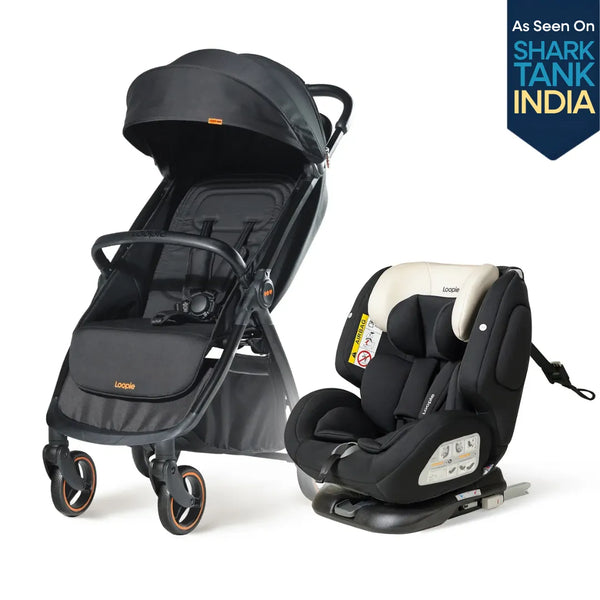
The Loopie Lap is built exactly around this idea of one seat that grows with your child. It's a convertible car seat covering Groups 0+, 1, 2, and 3, so it supports your child from birth to around 12 years (0–36 kg) without a replacement at each stage, removing the need for a separate infant car seat in the newborn months. It installs both ways, with ISOFIX and top tether or the standard seat belt, so it fits both ISOFIX and non-ISOFIX cars on Indian roads, and it's certified to the European UN ECE R44/04 standard.
Along the way, it's designed for the realities of everyday use: rear-facing for newborns with full head and neck support, a forward-facing 5-point harness for toddlers, and a booster mode for older kids, plus a 360° rotation that makes lifting your child in and out far easier on your back, and integrated side-impact protection with extended side wings. It's one of the few seats in India genuinely designed to last from the first ride home to the school run years.
One Seat for Every Mile
Choosing a car seat isn't just about the newborn stage; it's about every ride for the next decade. A convertible car seat takes that long road and simplifies it into one thoughtful, adaptable seat that fits your child at every age and grows with them. Get the fit right at each stage, keep the harness snug, and check your setup as they grow, and you've done the most important work.
Because the destination matters, but so does every mile in between.
Frequently Asked Questions (FAQs)
What is a convertible car seat?
A convertible car seat is a single seat that adapts as your child grows, from rear-facing for infants to forward-facing for toddlers, and, in multi-group seats, to a booster for older children. It's designed to replace buying a separate infant car seat, toddler seat, and booster at each stage.
Can one car seat really last from 0 to 12 years?
Yes. A multi-group convertible car seat covering Groups 0+ to 3 (0–36 kg) is designed to cover birth to around 12 years in a single seat, adjusting its harness, headrest, and recline at each stage. The Loopie Lap is one such seat.
Do I still need a separate infant car seat if I buy a convertible seat?
No. A convertible seat that supports rear-facing installation from birth serves as an infant car seat in the newborn stage, then continues to use, so you don't need to buy one first and replace it later.
Is a convertible car seat safe for a newborn?
Yes, when it supports rear-facing installation with proper infant support and recline. Rear-facing is the safest position for newborns, and a good convertible seat works as an infant car seat from birth, providing full head and neck support.
Does a convertible car seat fit cars without ISOFIX?
It should. A well-designed convertible seat installs both with ISOFIX and top tether and with the car's standard three-point seat belt. Since ISOFIX isn't mandatory in India, seat-belt compatibility is essential. The Loopie Lap supports both.
When should I move my child to the next stage?
When your child reaches any one of the seat's limits, weight, height, or harness fit, whichever comes first. Don't switch by age alone, and keep your child in each stage as long as they still fit within the limits.
Which car seat groups does the Loopie Lap cover?
The Loopie Lap covers Groups 0+, 1, 2, and 3, supporting children from birth to 36 kg. It adjusts across all stages without needing a replacement, making it a single long-term investment for Indian parents.