You have probably seen EN 1888 printed somewhere on a stroller box or product page and moved on without a second thought. It looks like the kind of technical fine print that doesn't really need reading. But this specific standard is the reason a stroller doesn't tip when your toddler leans over the side to grab a dropped toy, and the reason the brake actually holds on the slope outside your building.
This read is for parents currently comparing strollers, anyone who's seen "EN 1888-2 certified" on a listing and wondered what it actually tests, and parents who assumed a safety label means more than it does, or less than it does.
Here's what EN 1888-2 actually covers, what it doesn't, and what it looks like from the inside, building a stroller that has to pass it.
What to Keep in Mind
This is general product safety information, not a substitute for reading your specific stroller's own manual and weight limits. Loopie is a baby gear brand, not a certification body, so treat this as an explainer, not the final word, and always check the specific compliance documentation for whatever stroller you are considering.
What Is EN 1888-2?
EN 1888 is the European safety standard covering wheeled child conveyances, prams, pushchairs, and strollers. It isn't one single test; it is a family of standards, and the specific part matters more than most product listings let on. EN 1888-1 covers pushchairs and prams for children up to roughly 15kg. EN 1888-2 covers pushchairs designed for a child with a maximum mass of 22kg. In practice, the strollers are built to carry a child from infancy through the toddler years, which many Indian families actually use for the longest stretch.
That distinction is exactly why the specific sub-standard on a product listing is worth reading, not just the general "EN 1888" name. A stroller certified only to the lighter-weight part of the standard isn't necessarily tested for a heavier, older toddler climbing in and out on their own. If you are still deciding whether your child needs a pram or a stroller at all, our guide on the difference between a pram and a stroller breaks down exactly when that switch typically happens.
Also read: Best Road Trip Tips for Parents Travelling With Babies In India

What Gets Tested Under EN 1888-2?
The standard focuses entirely on structural safety and durability, not comfort or design. The core tests cover:
-
Stability and tilt resistance, checking whether the stroller stays upright under realistic, uneven load, including a bag hanging on the handlebar, a genuinely common real-world scenario the test accounts for
-
Braking performance, confirming the brake holds the stroller in place on an incline, not just on flat ground
-
Harness and buckle strength, testing that the restraint system holds under load and doesn't release unexpectedly
-
Frame and joint durability, simulating repeated folding, unfolding, and daily wear over the stroller's realistic lifespan
-
Locking mechanism reliability, making sure a folded stroller can't accidentally collapse while in use
What EN 1888-2 Doesn't Tell You?
This part matters just as much as what the standard covers. EN 1888-2 says nothing about ride comfort, how the wheels handle genuinely uneven Indian pavement, cushioning quality, ease of one-handed folding, or how a stroller looks. Two strollers can both carry the same certification and feel completely different to actually push down the road. Certification is the safety floor, not the full picture, and treating it as a comfort or quality guarantee is a genuine, common misread.
Common Things Parents Get Wrong About This Label
If it's certified, all certified strollers are equally safe. Certification confirms a minimum bar was cleared, it doesn't mean every certified stroller performs identically beyond that bar.
The certification is basically a formality brands put on the box. It isn't. Passing EN 1888-2 involves genuine, repeated mechanical testing, tilt tables, load cycles, brake tests on an incline, not a paperwork exercise.
A sturdy-looking frame means it's definitely tested and certified. Appearance and certification are two different things entirely. A heavy, solid-feeling frame can still be uncertified, and a genuinely well-tested stroller doesn't have to look bulky to have passed.

What It Actually Looks Like to Build Toward This Standard
We asked our product team what EN 1888-2 compliance actually changes about how a stroller gets designed, not just tested at the end.
The standard shapes decisions early, not as a final checkbox. Stability testing, for instance, influences wheelbase width and wheel suspension geometry from the earliest design sketches, since a frame that only becomes stable after the fact usually requires a full redesign rather than a small fix. Braking performance shapes which brake mechanism and pedal placement actually make it into production, since a brake that works on a flat showroom floor doesn't automatically hold on the kind of incline a parent might face outside a metro station or a sloped driveway.
Indian conditions add a genuinely different layer on top of the European baseline. Heat and UV exposure affect how plastic components and fabric coatings age over years of parked-in-the-sun use; dust affects how wheel and folding mechanisms perform after months of daily use on uneven roads, not just in a lab. A stroller can pass EN 1888-2's structural tests and still need additional engineering to hold up specifically to an Indian summer, monsoon humidity, and the kind of broken pavement common on many Indian streets. This is also why the right size of stroller matters alongside certification; our guide on choosing between a full-size and travel stroller covers how that decision plays out for daily Indian conditions specifically.
Certification Is the Floor, Not the Whole Answer
None of this means certification doesn't matter; it absolutely does, and a stroller without it shouldn't be on your shortlist at all. But once you have confirmed a stroller is genuinely EN 1888-2 certified, the more useful next questions are about your own daily reality: does the wheelbase handle your actual streets, does the brake hold on your actual slope, does the frame hold up to your actual summer.
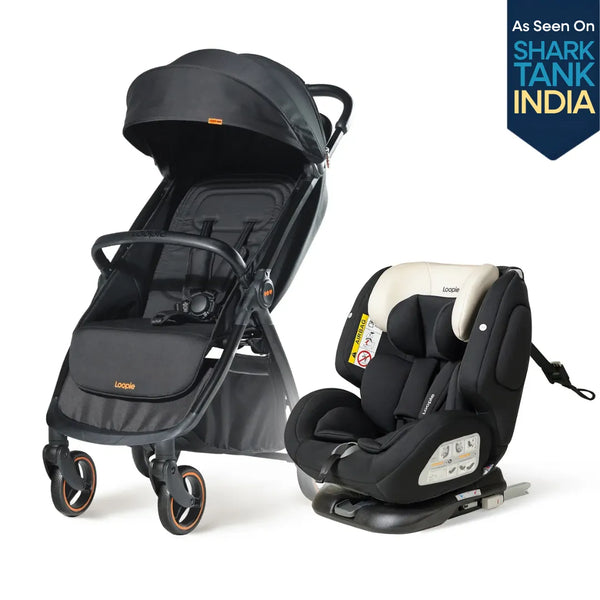
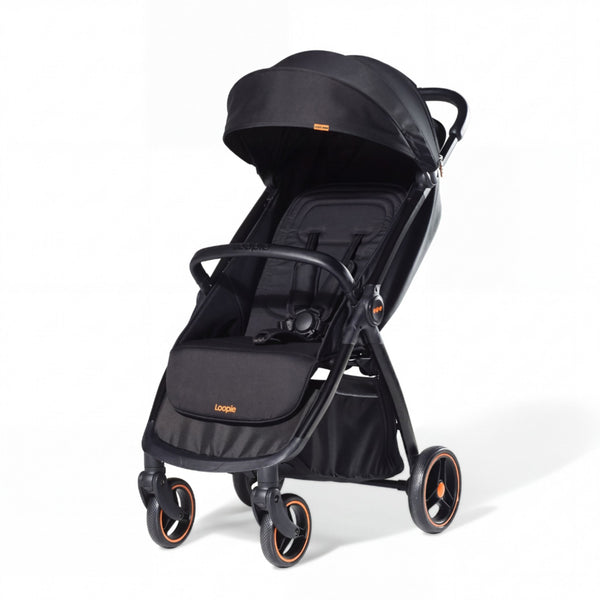
The label tells you the stroller cleared a real, meaningful safety bar. It doesn't tell you whether it is the right stroller for your specific life, and that second part is worth just as much attention as the first. Our own Loopie Hop stroller is built to exactly this bar and beyond, tested to EN 1888-2 and put through additional durability testing well past the standard's own minimum, precisely because meeting the label is the starting point, not the finish line.
EN 1888-2 specifically applies to strollers built for children up to 22kg; not all strollers carry this specific certification level. The standard tests structural safety, stability, brakes, harness strength, and durability, not comfort, ride quality, or ease of use. And certification is a genuine, meaningful floor, not a full guarantee that a stroller suits your specific streets, climate, and daily routine.
For Every Ordinary Walk
A safety standard printed on a box doesn't sound like much until you think about what it is actually protecting against: a tip on an uneven curb, a brake that fails to hold on a slope, a harness that doesn't do its job on a sudden stop. EN 1888-2 exists because those moments are genuinely ordinary, not rare edge cases, and a stroller built to properly clear that bar is doing real, invisible work every single time you step out the door.
Read the label, but don't stop there. Ask what is underneath it too, because the family walking their stroller through an Indian summer deserves a little more than a passing grade on a European test bench. Explore the Loopie Hop, or browse our full range of strollers and prams built with exactly this standard in mind.
Frequently asked questions
What is EN 1888-2 certification for strollers?
It is the specific part of the European EN 1888 safety standard covering pushchairs and strollers for children up to roughly 22kg, testing stability, braking, harness strength, and structural durability.
Is EN 1888-2 different from EN 1888-1?
Yes. EN 1888-1 covers lighter-weight pushchairs and prams (up to roughly 15kg), while EN 1888-2 covers strollers built for a higher child weight limit, generally the stage many families use the longest.
Does EN 1888-2 certification mean a stroller is comfortable to use?
No. The standard tests structural safety only, stability, brakes, harness, and durability. It says nothing about ride comfort, cushioning, or ease of folding.
How can I check if a stroller is genuinely EN 1888-2 certified?
Look for the specific certification number on the product listing, packaging, or manual, not just a general "EN 1888" mention. If it isn't clearly stated, ask the brand directly for confirmation.
Is a certified stroller automatically suitable for Indian roads and climate?
The certification confirms that the stroller meets the European structural safety baseline. Whether it holds up to Indian heat, dust, and uneven pavements over years of daily use is a separate, additional consideration worth asking about directly.