Most parents research feeding schedules, sleep routines, and school admissions in detail. Road safety, including choosing and using a child car seat in India, rarely gets the same attention, even though so much of the risk to a child in a moving vehicle comes down to something preventable: whether they're properly restrained.
This read looks at what actually protects a child, what Indian law requires, and where the real gaps still sit. As Piyush Tewari, Founder and CEO of SaveLIFE Foundation, puts it on the podcast Are Kids Safe On Roads? Indian Road Safety Reality!, hosted by Akriti Gupta, Founder of Loopie: "This isn't just a policy issue, it's a moral issue."
It's for new parents planning their first rides with a baby, families relying on cabs, autos, or two-wheelers, and caregivers who share travel duties.

What to Keep in Mind
Road safety for babies isn't only about avoiding accidents. It's about reducing how serious an injury becomes if something does go wrong.
A baby's body doesn't scale down from an adult's; the head, neck, and spine need protection designed specifically for how a child is built. And in India, this applies to every kind of trip, from a quick errand to a long highway drive, not just the long ones.
Why Holding Your Baby in the Car Feels Safe, But Isn't
Many parents in India grew up being held in a parent's lap during car rides, so it feels instinctive to do the same with their own children. Tewari's explanation of why this doesn't work comes down to simple physics. "When a moving vehicle stops suddenly, the vehicle stops, but everything inside it continues moving at the same speed," he explains. "That's inertia." It applies to people just as much as loose objects.
A child's head makes up close to 25% of their total body weight, compared to roughly 6% in adults. That disproportion means sudden deceleration puts enormous stress on a young neck. In crashes SaveLIFE Foundation has investigated, children have been found thrown clear of the vehicle entirely, a devastating outcome that starts with a moment as ordinary as being held instead of restrained.
Is it safe to hold a baby in your lap in a car
No. In a crash, an adult cannot physically hold onto a child against the force involved. The adult's own body often ends up crushing the child against the dashboard or seat ahead, and in many cases the child is thrown from their arms entirely, regardless of how tightly they were held.
Do babies need a car seat for short rides
Yes. Crash forces depend on speed, not distance. A collision at speeds as ordinary as 30 km/h, well within typical city driving, can generate enough force to seriously injure an unrestrained child. The risk comes from sudden deceleration, not how far the family happens to be travelling that day.

Car Seats: What Actually Protects a Child
Once the instinct to hold a child gives way to using a restraint, the next question is usually which one, and why it matters more than it might seem.
Reason why adult seat belts don't work for children
Adult seat belts are built for people at least 4'9" (145 cm) tall and around 35-40 kg. A child who doesn't meet that height and weight doesn't fit the belt's design, and an improperly positioned belt can sit across the neck or stomach, causing injury instead of preventing it.
Rear-facing or forward-facing, which comes first
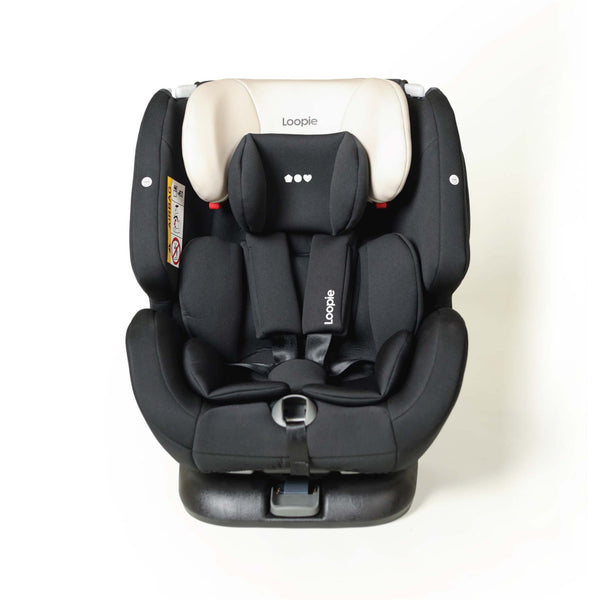
Rear-facing seats come first, recommended until around age two, since they reduce the risk of fatal injury by roughly 70% by spreading crash force across a child's back instead of the neck and spine. Forward-facing seats follow as children grow, still cutting fatal injuries by about 45%.
When can a child move to a booster seat
Somewhere between ages 4 and 12, depending more on height and weight than age alone. A booster seat raises a child enough that the adult seat belt finally sits correctly, across the shoulder, chest, and pelvis, instead of across the neck or stomach where it offers little protection.
What if the car doesn't have ISOFIX
Not every car in India has ISOFIX anchor points, especially older models, but that doesn't rule out a child restraint system. Approved seatbelt-based installation methods work safely in vehicles without ISOFIX; checking the specific car seat's installation guide confirms which method applies and how to fit it correctly.
Explore more about child seat safety to understand everything about baby car seat safety, including certifications, usage tips, and common mistakes to avoid. Read our blog: Ensuring Maximum Baby Car Seat Safety.
What Indian Law Actually Says
India's legal framework for child safety in vehicles has grown steadily, even if most parents haven't heard the details.
For two-wheelers, the Ministry of Road Transport and Highways' rules on child pillion safety require children between 9 months and 4 years to wear a crash helmet and be secured to the rider with a safety harness, with the motorcycle's speed capped at 40 km/h.
Tewari's own framing of why this matters extends beyond the paperwork: this is a moral responsibility, not only a policy one. Children are dependent on the adults around them to make these choices correctly, every single time.
Legal Requirement of a car seat in India
Under Section 194B(2) of the Motor Vehicles Act, 1988, any child under 14 must be secured by a safety belt or a child restraint system, with a fine for non-compliance. The law allows either option, though a properly fitted CRS remains the safer choice for younger children.

The Real Reason Parents Skip Car Seats
Even among the most careful parents, this is one area that quietly slips through, and Gupta noticed it directly while building Loopie. "One thing I've noticed," she has said, "is that even among highly educated and financially comfortable families, there's a lot of resistance towards using child car seats." Tewari's response reframes why, in a way that isn't about placing blame. "I don't believe education is necessarily evidence of wisdom," he says. "Being highly educated doesn't automatically make someone safety-conscious."
It isn't really about affordability either. Many of the same families who resist car seats at home use them without a second thought when travelling abroad, which points to something simpler: once parents actually understand what happens to a child's body in a crash, the resistance tends to fade on its own.
That's really the fix here, not stricter rules, but a clearer picture of why the seat matters in the first place. Tewari is direct about where the remaining responsibility sits: the legal framework already exists, so the real problem is enforcement.
Why the Law Alone Isn't Enough
The legal framework for child restraint systems already exists in India. What's missing, according to Tewari, is consistent enforcement. Rear seat belt use has technically been required by law since the early 2000s, yet enforcement has stayed thin, especially outside city limits.
City traffic policing tends to catch some violations, but enforcement on highways is markedly weaker. CCTV systems can detect speeding, signal jumping, and dangerous lane changes, but they generally can't tell whether a child is properly restrained inside a vehicle. Even police personnel sometimes lack training on why these rules exist in the first place, which makes consistent enforcement harder to build from the ground up.
Who Else Needs to Step Up
Most Indian ride-hailing services don't provide child seats, so technically, a baby can travel in a cab without one today. Tewari's view on this is direct: these are large, well-resourced companies, and the responsibility for making child seats available shouldn't rest on parents alone. "The question we should really be asking," he says, "is why these companies are not being held accountable." Consumer demand plays a role here too; when more parents ask for safer options, companies have a reason to invest in them.
Availability of child seats in Indian taxis or cabs
Rarely. Most ride-hailing and taxi services in India don't provide child seats as standard, unlike similar services in some other countries. This leaves parents to arrange their own child restraint system for cab rides, which is part of why consumer demand for safer options genuinely matters.

A Quick Checklist for Every Ride
Before starting the car, a few checks make the difference between a habit and a hope:
-
Is the child in an age and size-appropriate restraint, not just belted in with an adult seat belt?
-
Is the restraint actually installed correctly, whether through ISOFIX, a top tether, or the vehicle's own seat belt?
-
Is everyone in the car wearing a seat belt, front and back, not just the driver?
-
If travelling by two-wheeler, is the child wearing a certified helmet and secured with a safety harness, with speed kept under 40 km/h?
-
If travelling by cab or auto, has a child restraint been arranged in advance, since most ride-hailing services in India don't carry one?
-
Does at least one adult in the car know the basics of Check, Call, Care, along with the emergency numbers to call if something goes wrong?
None of these take more than a minute to run through, and together they cover most of what actually goes wrong on Indian roads.
Wondering which car seat is suitable for your child? Read our blog: Child Car Seat Groups Explained.
What to Do If an Accident Happens
If the worst does happen, Tewari recommends a simple three-step approach: Check, Call, Care.
Check the scene for immediate danger before approaching; things like fire, exposed wires, fuel leaks, or oncoming traffic.
Call for professional help right away; in India, that means 112 for national emergencies, 108 for ambulance services in many states, and 1033 for highway-specific emergencies through the National Highways Authority.
Care for the injured person as best you safely can while help is on the way. It's also worth remembering that stopping to help is legally protected under India's Good Samaritan Law, a fact many bystanders still aren't aware of, which is part of why hesitation costs precious time during the Golden Hour.
Three life-saving skills sit under that last step: CPR, bleeding control, and spinal protection, along with knowing how to respond if a child is choking. Each of these requires proper training to do safely and correctly, since technique varies by age between infants, children, and adults.
This blog won't walk through the steps here, since getting any of these wrong, especially spinal protection or CPR, can do more harm than good without hands-on training. The Indian Red Cross Society's First Aid training programme is a good starting point for parents who want to actually learn these skills properly.
What is the Good Samaritan Law
It's a legal protection that shields bystanders who help accident victims from harassment or legal liability for stepping in. Many people in India still don't know it exists, which keeps some from stopping to help. The law exists precisely so people can act quickly during the Golden Hour.
Which emergency numbers matter for road accidents in India
112 works for general emergencies nationally, 108 connects to ambulance services in most states, and 1033 reaches the National Highways Authority for highway-specific accidents. Calling immediately, before attempting any first aid, gives an injured person the best chance of receiving professional medical care in time.

Safety as a Shared Responsibility
No single group can fix this on their own, and that's not a discouraging thought so much as a realistic one. Parents choosing and correctly using age-appropriate restraints is one part. Government bodies strengthening enforcement and training police on why these rules matter is another. Automakers building CRS compatibility into more vehicles helps too, and ride-hailing platforms making child seats available would close a real gap that currently falls on parents to work around.
Manufacturers of child safety products have a role as well, working with two-wheeler taxi operators and car aggregators to make the right equipment more available.
What to Look for in a Car Seat That Fits Every Vehicle
Not every family drives the same car every day. A child might travel in a personal car most days, a grandparent's car on weekends, and a rented car during a festival trip home, each with different anchor points and seat geometry.
A car seat that installs correctly across ISOFIX, a top tether, and a traditional seat belt gives a family that flexibility without needing to think twice every time the vehicle changes. The Loopie Lap, for instance, supports all three installation methods, which matters less as a feature checklist and more as one less thing for a parent to worry about on a day when the car isn't the usual one.
FAQ Parents' Most Asked Questions On Road Safety
A Positive Way Forward
None of this is meant to make travelling with a baby feel like a minefield. Indian roads, like roads everywhere, carry risk, but that risk responds well to preparation. A correctly installed child car seat, a habit of wearing seat belts as a family, and a basic understanding of why these choices matter go a long way.
"Keeping children safe is our moral responsibility," Tewari said, closing out the conversation. "We must do everything within our power to ensure that their journeys are as safe as possible."
Akriti continued, Road safety isn't just about traffic rules; it's about protecting lives, especially the lives of children. That's really the throughline of the entire conversation, and it holds up well beyond the podcast itself. Every small, consistent choice- a seat correctly installed, a belt actually worn, a habit passed on to whoever else drives the family around- adds up to safer journeys for the next generation of Indian families.