Planning a monsoon trip with your baby doesn't have to mean bracing for the worst. It does mean thinking a little differently than you would for a winter or summer trip. Rain changes the pace of a day, and babies notice pace before anything else.
This guide walks through what actually shifts when you travel with a baby during India's monsoon season, from health basics to packing to getting around, so you can plan with confidence instead of guesswork.

How Monsoon Travel Differs by Your Baby's Age
A four-month-old and a fourteen-month-old experience a rainy season trip very differently, and your planning should reflect that.
Newborns and young infants (0–3 months) feel temperature swings more than older babies do, and they can get overstimulated faster in a new environment. Short trips and staying somewhere with easy access to medical care tend to work better at this age.
One parent recounting a trip with a four-month-old on an online parenting forum mentioned carrying a familiar blanket or toy just to help the baby feel secure in unfamiliar surroundings, alongside making sure vaccines and regular medicines were sorted before leaving.
Babies between six and twelve months are usually mobile, mouthing everything in sight, and often starting solids. This is the age where floor hygiene and surface cleanliness in hotel rooms or homestays start to matter more, since a crawling baby picks up far more from their surroundings than a newborn would.
Toddlers bring a different kind of attention: they're drawn to puddles, open drains, and anything shiny and wet. Safety here is less about illness and more about supervision on slippery or uneven ground.
Whatever the age, a little rhythm helps. Keep feeding and nap times roughly on track even while travelling, and build in slower mornings rather than packing every hour with plans.
How Monsoon Weather Affects a Baby's Health, and What to Watch For
Rain brings its own set of health considerations for young children, and it helps to know them without dwelling on them.
Indian paediatric and hospital sources consistently point to a seasonal rise in respiratory infections, stomach infections, and mosquito-borne illnesses like dengue and malaria during the monsoon months, largely linked to humidity, waterlogging, and increased mosquito breeding, according to Rainbow Hospitals' overview of monsoon diseases in children. Babies are more susceptible simply because their immune systems are still developing.

None of this means avoiding travel altogether. It means knowing what to watch for. Max Healthcare's guide to monsoon safety for children lists persistent high fever, unusual lethargy, difficulty breathing, poor feeding, and signs of dehydration as the signals that call for a doctor's attention right away, whether you're at home or on the road.
It's worth having your paediatrician's number saved before you leave, along with the contact for a clinic near your destination. This is general information, not a substitute for your own doctor's advice, especially if your baby has any existing health condition or was born early. A quick check-in with your paediatrician before you travel is always a good idea when the weather is uncertain.
Why Hygiene and Mosquito Protection Matter More on a Monsoon Trip
Two things do a lot of heavy lifting for keeping your baby well on a monsoon trip: what goes into their mouth, and what's around their sleeping space.
On the food and water side, stick to freshly cooked hot meals and reliable, sealed drinking water. Contaminated water and undercooked or raw food are commonly linked to monsoon stomach infections in children, per Hindustan Times' monsoon health advisory for kids. Washing or sanitising hands before every feed, and after using public transport or restrooms, goes a long way too.
Mosquitoes are the other piece. Stagnant water left behind by rain is exactly where dengue-carrying mosquitoes breed, so it's worth checking that your hotel room or homestay doesn't back onto standing water, and packing full-sleeved, breathable clothing for your baby.
A foldable mosquito net for the cot or stroller is a small addition that makes a real difference. If you're considering a repellent for your baby's skin, that's a conversation for your paediatrician first, since the right product and concentration depends on your baby's age.
None of this needs to feel like a checklist of worries. Most of it comes down to a few consistent habits you're probably already building into your daily routine at home.

What to Pack for a Monsoon Trip With Your Baby
A good monsoon packing list leans on a few categories: clothing, rain protection, a small health kit, and gear that keeps your hands free.
Clothing and layers
-
Breathable cotton, full-sleeved bodysuits, and full-length bottoms, since humidity keeps mosquitoes more of a concern than in dry weather.
-
A couple of extra sets beyond what you'd normally pack, since damp weather means clothes take longer to dry.
-
One light layer for sudden air-conditioning or a cooler evening.
Rain and moisture protection
-
A rain cover for the stroller, and a waterproof cover for the diaper bag.
-
Quick-dry hooded towels or muslin cloths, useful for a fast dry-off if your baby gets caught in a shower.
-
A couple of spare plastic bags for wet clothes.
A simple health kit
-
A digital thermometer, saline nasal drops, and your baby's regular medicines.
-
Diaper rash cream, since humidity can make rashes more likely.
-
Any medicines your paediatrician has specifically recommended for travel, including oral rehydration salts if advised.
Interested in understanding how you can adjust clothing, skin care, feeding, and home environment for the season? Read our blog on Monsoon Season Baby Care Tips.
Gear that keeps you both comfortable
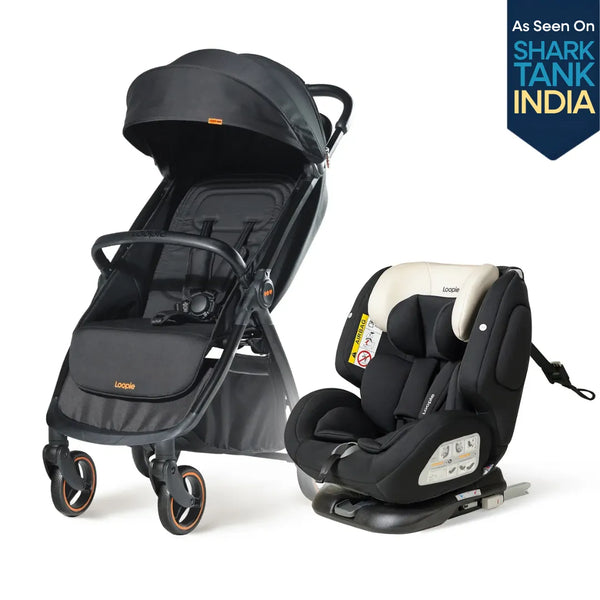
A properly fitted infant carrier works well for babies under a year, since it keeps your hands free for luggage while keeping your baby close and dry. Once your baby is walking, a lightweight umbrella stroller with a rain cover tends to be easier to manage.
This is one of the few places where the right gear genuinely makes travel days smoother, whether that's a stroller that folds down quickly at a busy railway platform or a diaper bag with a water-resistant lining that doesn't add to your load.
Don't forget your own bag
More than one parent, recounting long-haul travel with an infant on an online parenting forum, mentioned packing a full spare outfit for themselves along with baby's essentials, since spills and sudden messes tend to land on the parent as often as the baby.
A small pouch with the things you're likely to reach for quickly- hand sanitiser, a pen, lip balm, sachets of any regular medicine- saves you from digging through a full bag one-handed while holding a fussing baby.

How to Travel by Train, or a Flight With a Baby in Indian Monsoon
Getting from one place to another is often the part of monsoon travel that needs the most patience, not the baby.
By Train
Platforms get crowded, and stairs get slippery. It helps to have one adult free to carry the baby while the other manages the luggage, rather than both hands full at once.
By Flight
A few small habits make a real difference. Feeding your baby during takeoff and landing helps ease the pressure change in their ears, a tip echoed by more than one parent on an online travel forum recounting long-haul flights with an infant.
Packing light on hold luggage and keeping one small bag of essentials, nappies, wipes, a change of clothes, within reach under your seat means you're not caught out during a delay.
If your baby has an infant car seat, it's worth asking the airline whether an empty adjacent seat might be available, or whether the seat can be gate-checked if the flight is full. Feeding pouches or a nursing-friendly top can also save you from juggling a bottle mid-flight.
By Cab or Auto
Waterlogged roads and sudden stops are the main things to plan around. Keep your baby's car seat secured and give yourself a little extra time for entry and exit, especially if you're managing an umbrella and a bag at the same time.
Across all three, the same idea holds: build in more time than you think you need. Monsoon delays are common enough that a relaxed buffer between connections, or between check-out and your next move, saves everyone the stress of rushing.
You can explore our ultimate diaper bag packing checklist to know what items you should pack in a diaper bag for any outing or travel. Read the blog: How to Pack a Diaper Bag For Travelling with Baby?

How to Choose a Monsoon Destination, and When It's Fine to Wait
Not every destination carries the same level of risk, and a little research before booking goes a long way.
Regions prone to flooding or landslides, and areas with limited access to hospitals or clinics, are worth avoiding with a young baby, according to StayVista's guide to monsoon travel with kids in India.
Cities and towns with reliable drainage, established tourist infrastructure, and nearby healthcare tend to be a steadier choice, whether that's a well-connected town instead of a remote, rain-heavy trek, or a stay with solid backup power and clean, dry rooms instead of a more isolated homestay.
It's completely fine to postpone a trip
A red weather alert, a flood warning for your route, or your baby simply being under the weather are all good enough reasons to wait. Choosing to delay a trip isn't a loss. It's a reasonable call that most parents end up making at some point, and there will always be another window to travel.
A Note From Fellow Parents
Some of the most useful monsoon travel wisdom doesn't come from hospitals or checklists. It comes from parents who've simply done the trip before.
Across a few online parenting and discussion forums, recurring advice includes carrying a well-loved toy or blanket to settle a baby in an unfamiliar room, keeping a spare outfit within easy reach for the inevitable spill, and building in far more time between connections than feels necessary.
None of it is complicated. Most of it comes down to giving yourselves a little more room than usual.
FAQs: Most Asked Questions On Monsoon Travel
Is it safe to travel with a baby in the monsoon in India?
Generally, yes, with sensible precautions. Risk depends more on your baby's age, health, and your destination than on the season itself. A quick check-in with your paediatrician before you travel is a good idea, especially for very young babies.
What should I pack for a monsoon trip with my baby?
Breathable full-sleeved clothing, a stroller rain cover, quick-dry towels, a small health kit with a thermometer and regular medicines, and a couple of extra outfits since things dry more slowly in humid weather.
Is mosquito repellent safe to use on my baby while travelling?
This depends on your baby's age and the product itself, so it's best discussed with your paediatrician beforehand. In the meantime, full-sleeved clothing and a mosquito net for the cot or stroller are a safe, simple first step.
What are lower-risk destinations for a baby during monsoon?
Places with reliable drainage, good road connectivity, and easy access to healthcare tend to be steadier choices than remote, flood-prone, or landslide-prone areas.
Happy Monsoon Travels!
Monsoon travel with a baby asks for a bit more planning than a trip in drier months, but it's far from off-limits. A little attention to your baby's age, a simple packing list, some patience with trains and flights, and the willingness to wait out a bad weather warning cover most of what you need.
The rest is really just what parenting already looks like: paying attention, adjusting as you go, and giving yourselves room to slow down when the rain does. Loopie stroller comes with a rain cover for exactly this kind of unpredictability, which just makes it a little easier to enjoy.
Pack thoughtfully, plan a little extra time into your days, and the monsoon can end up being a rather cozy season to travel in, with gear that keeps up with you making that a lot easier.