A nursery gets imagined a certain way: a themed room, matching furniture, a crib photographed from the perfect angle. What most families end up with is a corner of a bedroom, a rented flat with fixed cupboards, or a room that grandparents and a nanny will use just as often as the parents do.
This read lays out practical nursery ideas, shaped around Indian homes, Indian weather, and the reality that a baby's room is rarely run by just one person. You'll also find what's worth sorting out before you touch a paint swatch, and a few popular nursery trends better left off your list.
Whether you're a first-time parent planning ahead of the due date, or setting up a space that grandparents and household help will use just as often as you do, this one's built for how the room will actually be lived in.

Things to Keep in Mind before Starting Nursery Design
Ask yourself: does your baby need a separate nursery?
No. A family can prepare a nursery for changing, feeding, and storage while the baby's actual sleep space stays in the parents' room to begin with. The American Academy of Pediatrics' safe sleep guidelines recommend room-sharing without bed-sharing for at least the first six months, which takes the pressure off finishing a whole room before the due date.
This is worth repeating because so many parents feel behind if the nursery isn't "done" by month eight. It genuinely doesn't need to be. One parent on Reddit wrote that she finished her baby's whole room during a slow week in the second trimester and never touched it again once the third trimester exhaustion set in.
Another parent, replying in the same thread, shared that she handled the decorating and furniture assembly around 30 weeks with help from her husband and father, since her back wouldn't allow much more, then slowly sorted drawers and clothes over the following months.
A few parents in similar discussions admitted they didn't get to it at all until after the baby arrived, and it worked out fine regardless, since the baby was rooming in with them to start.
So what’s the counterargument?
Some parents pushed back on the idea altogether, arguing in the same kind of thread that you should finish the nursery early precisely because you won't have the time or energy for it once the baby's home.
Both approaches show up often in these discussions, and neither is the "right" one. What matters more than timing is starting with the room's actual use rather than its look.
Before choosing colours or furniture, it helps to think through a few basics:
-
Where will the baby sleep for the first few months?
-
Where will feeds and nappy changes happen?
-
How much floor space will you need once the baby starts crawling?
-
Can a tired adult move around the room safely at 3 a.m.?
A little planning here saves a lot of rearranging later. If you want to start from the very basics before layering in these 2026 ideas, our earlier guide on how to set up a baby nursery at home walks through the essentials step by step.
The 10 Nursery Design Ideas for 2027
1. Zone the Room Around Your Daily Routine
Rather than designing for symmetry, divide the room by what actually happens in it: sleeping, feeding, changing, storing, and playing. Keep the crib clear of clutter, place the feeding chair close to a side table, and position the changing area near your nappy and clothing storage so you're not walking across the room mid-change.
The real question isn't how to fit everything in. It's what your family does here every single day, and building the layout around that.

2. Keep the Sleep Area Simple and Safe
Things that should not go inside a baby's crib: Pillows, quilts, loose blankets, bumpers, stuffed toys, and positioners should all stay out of a newborn's crib.
The American Academy of Pediatrics' safe sleep guidelines recommend a firm, flat sleep surface with just a fitted sheet and placing babies on their backs for every sleep.
It's easy to see why this gets confusing. Nursery photos online are often styled with cushions and soft toys tucked into the crib, and it looks lovely. But styling and everyday safety are two different things. Keep the crib itself uncluttered, and let the personality of the room live everywhere else.
This is general safety information from a recognised body, not a substitute for guidance from your own paediatrician, so do check in with them if anything about your baby's sleep setup feels uncertain.
3. Choose Furniture That Grows With Your Baby
A crib that can convert later, a dresser that doubles as a changing station, a glider that becomes a reading chair. These choices save you from buying the same category of furniture twice within a couple of years.
Check assembly instructions, stability, warranty, and finish quality before you commit. "Convertible" is a helpful feature, but it's not a guarantee of quality on its own, so it's worth reading reviews or checking with the manufacturer directly.
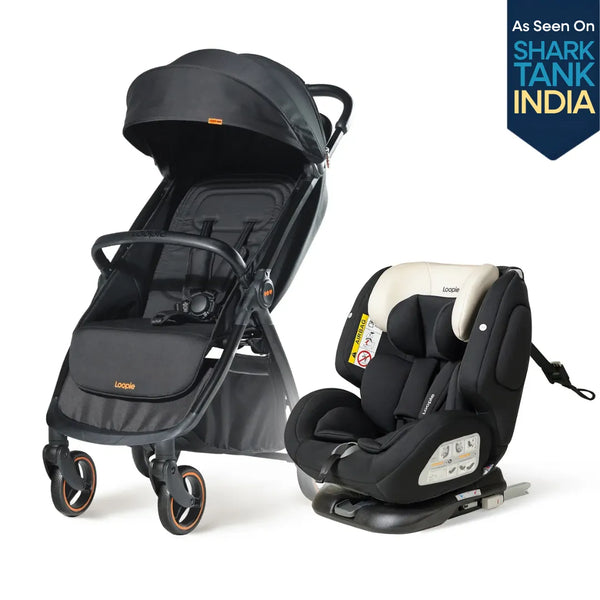
If you're also picking up gear that will live in this room, such as a car seat or stroller, choosing pieces designed to adapt as your baby grows tends to work out better for your wallet and your storage space in the long run.

4. Smart Storage for Small Nurseries
Vertical storage, labelled baskets and a small trolley for frequently used supplies go a long way in a compact room. Narrow units work better than deep, bulky ones, and drawers you can access without pulling out half a wardrobe make night-time changes a lot less painful.
One thing worth doing regardless of space: secure tall furniture properly. The U.S. Consumer Product Safety Commission's guidance on furniture tip-overs recommends anchoring dressers, bookshelves, and similar pieces, since children may climb or pull on them as they grow. It's a five-minute job that's easy to forget once the room feels "finished."
5. Warm, Gender-Neutral Colour Palettes
Warm whites, sage, terracotta, dusty blue and soft browns are strong directions for 2026, and for good reason. A neutral base adapts easily if you have a second child, doesn't feel dated within a couple of years, and makes it simple to add personality through art, textiles, or a single accent wall instead of repainting the whole room.
Neutral doesn't have to mean plain, either. One parent on Reddit described skipping a theme entirely for both her children's rooms, going with white furniture as a base, and simply adding pieces she liked as she came across them, often second-hand. Framed prints, toys and everyday baby gear filled in the personality on their own over time.
6. Low-Emission, Moisture-Aware Materials
Paint, furniture finishes, and even new textiles can carry a smell that lingers longer than you'd expect. Finish painting well before the baby arrives, air the room out thoroughly, and avoid placing furniture flush against a wall that shows any sign of dampness.
This last point matters more in India than most global nursery guides account for. The World Health Organization's guidelines on indoor dampness and mould estimate that damp conditions affect an estimated 10 to 50 percent of indoor spaces across regions including India, so it's worth a proper check of corners and wardrobes before you set up furniture, not just a glance.

7. Layered Lighting for Day and Night
One bright overhead light rarely works for a nursery. A dimmable lamp for night feeds, a low night light for moving around the room, and daylight you can control with curtains all serve different moments in the day.
If you're using blackout curtains, pay attention to cords and tiebacks. Anything dangling near the crib or a piece of furniture the baby might later climb is worth securing or removing altogether. Small habit, real difference.
8. Nature-Inspired, Sensory-Friendly Décor
Botanical prints, warm wood tones, a soft rug, a small shelf of books. Nature-inspired décor adds character without needing an elaborate theme, and it tends to age well as your baby grows into a toddler.
The instinct to fill a nursery with décor and toys is natural, but a few deliberate touches are usually easier to enjoy and maintain than a room packed with patterns and hanging objects. Keep anything decorative away from the crib itself, since what's out of reach today may not stay that way for long.
9. Climate-Conscious Choices for Indian Homes
Indian summers, monsoons, and dust bring their own set of decisions that most nursery guides never mention.
|
Season |
What to watch for |
|
Summer |
Keep fans and ACs from blowing directly on the baby; avoid overdressing during sleep. |
|
Monsoon |
Check wardrobes and corners for dampness; choose washable textiles. |
|
Year-round dust |
Prefer wipeable surfaces over deep-pile rugs or heavy fabric layers. |
|
Mosquitoes |
Use properly fitted window screens; keep any repellent product well out of reach. |
None of this needs to be complicated. It's mostly about choosing materials and layouts that hold up to real Indian weather instead of copying a nursery photographed somewhere with a very different climate.
10. A Future-Ready, Easy-to-Clean Room
Milk spills, nappy leaks, crawling, and eventually paint on the walls from a curious toddler. Washable paint, sealed furniture surfaces, rounded edges, and a washable play mat go a long way toward a room that survives all of it without needing a redo every year.
It also helps to remember that the room fills itself in over time. As a Reddit mom noted in her post about skipping a nursery theme, the colourful toys, stuffed animals, and everyday baby gear that show up naturally end up acting as décor on their own, so there's rarely a need to have every surface planned out from day one.
As your baby starts crawling and pulling up, take one more walk around the room. Cords, drawers, small objects, and low shelves that were harmless a few months ago may not stay that way for long.

How to Design for More Than One Caregiver?
Indian nurseries rarely belong to one person. Parents, grandparents, a nanny, or relatives staying over after the birth often share the same space and the same routines, sometimes with very different ideas about how things should be done.
The room itself can't resolve every difference in opinion, but it can make the essentials easy for anyone to follow. A few things help:
-
Label storage clearly. Simple tags like "night nappies" or "extra clothes" mean anyone can find what they need without asking twice, especially during a 2 a.m. handover.
-
Agree on a few non-negotiables. Keep the sleep surface as intended, keep it clear of extra bedding, and check before introducing anything new to it.
-
Make room for tradition, away from the sleep space. Gifted furniture, a small prayer corner, or a favourite family blanket can absolutely have a place in the room. They just don't need to be inside the crib.
This isn't about correcting anyone's parenting instincts. It's about making sure the room works the same way no matter who's in it that day.
A well-planned room also gives every caregiver, not just parents, a comfortable spot to bond with the baby. Our guide to the best baby bonding activities has ideas that work well in exactly this kind of shared space.
Nursery Trends Worth Skipping
Not every popular nursery idea holds up in an Indian home. A few worth reconsidering:
-
Fabric canopies over the crib. They photograph beautifully but collect dust quickly and become a reach hazard once your baby starts sitting up.
-
Heavy layered rugs. Cosy in theory, hard to dry out during monsoon, and prone to trapping dust over time.
-
Elaborate murals right above the crib. Lovely as a feature, but the space directly above where your baby sleeps is better left uncluttered.
-
Oversized stuffed-toy displays inside the crib. Store them on a shelf instead and bring them out for supervised playtime.
None of these are mistakes exactly. They're just better suited to Pinterest boards than to the room your baby will actually sleep in.
FAQs: Most Asked Questions on Designing a Nursery
How large should a nursery be?
There's no fixed size. A dedicated room, a bedroom corner or a repurposed section of a small flat can all work well, as long as the essentials like a safe sleep surface, storage and a changing area fit comfortably without feeling cramped.
What should parents buy first for a nursery?
Start with a safe sleep surface and basic storage. Décor, lighting layers and accent pieces can be added gradually once the essentials are sorted, so there's no need to buy everything at once.
Are natural or "chemical-free" materials always safer?
Not automatically. Finish quality, ventilation, and how well a product is maintained matter just as much as the label. It helps to look for transparent product information rather than relying on marketing language alone.
How should a nursery be prepared for monsoon season?
Check walls, wardrobes, and corners for dampness before setting up furniture. Choose washable textiles, maintain good ventilation, and avoid placing anything directly against a wall that shows signs of moisture.
A Beautiful Space for your Li’l One!
A modern nursery in 2027 isn't defined by a theme or a deadline. It's a space that's safe to sleep in, easy to clean, comfortable for whoever's caring for the baby that day, and flexible enough to change as your little one grows. Start with the essentials, layer in the design choices that matter to you, and let the rest come together gradually. It usually does.