Somewhere in your house, there's a car seat in a cupboard. Maybe it's your older child's. Maybe it's a cousin's. Maybe it's the one a well-meaning neighbour handed over with the words, "It's barely used."
And then you flip it over and find a sticker with a date on it. Now what?
Yes, car seats expire. No, it isn't a marketing trick. And in India, where a parked car can turn into an oven by noon, the date on that sticker matters even more.
Most car seats last about 6 to 10 years from the date they were made, not the date you bought them. The exact number is set by the manufacturer and printed on the seat's label or in the manual. Heat, sunlight, a crash, missing parts or an unknown history can end a seat's safe life sooner.
Do Car Seats Expire?
They do. A car seat is built to hold together in a crash that you hope never happens. To do that, it has to be in good condition on the day it's needed, not only on the day it was made.
Like many things in a car, a seat ages. The plastic shell, the foam, the harness webbing, the buckle and the fabric all change slowly over the years. You may not see it. That's the point.
So when someone asks "how long are car seats good for?", the honest answer is a range, plus a label.
How Long Does a Car Seat Last?
Most brands set a lifespan somewhere between 6 and 10 years. Some are shorter. Some are longer. There isn't one number that fits every seat, because each manufacturer decides based on its own materials and testing.
A few things to know:
-
The clock starts at manufacture, not at purchase and not when you first use it
-
A seat in a box still ages, though how much depends on how and where it's stored
-
Your manual and label win. If a blog (including this one) says 8 years and your label says 6, go with 6
Here's how the dates differ:
|
Date |
What it means |
Does it set the expiry? |
|
Date of manufacture |
The day the seat was made |
Yes, this is where the count usually starts |
|
Expiry date |
The date the manufacturer says to stop using it |
Yes, this is the date to follow |
|
Date of purchase |
The day you bought it |
No |
|
Date of first use |
The day your baby first rode in it |
No (though some brands mention it, so check your manual) |
Also read:
Why Do Car Seats Expire?
It's fair to wonder whether this is a way to sell more seats. It isn't. These are the real reasons:
-
Plastic gets older. Over the years, heat and sunlight can make plastic more brittle. A brittle shell may not hold its shape in a crash
-
Straps and buckles wear out. Harness webbing stretches and frays. Buckles collect crumbs, spilled milk and sand
-
Foam and padding break down. The foam that absorbs crash force can harden or crumble
-
Safety rules and design improve. Newer seats are tested to newer standards, and older designs fall behind
-
Wear and tear adds up. Every install, every adjustment, every ride
None of this makes an older seat dangerous overnight. It means the manufacturer can no longer promise it'll work the way it was tested.

Plastic and Sun: What Heat Does to a Car Seat
Plastic doesn't love heat. Sunlight (specifically UV) and high temperatures speed up the ageing of many plastics, making them dry and brittle over time. Fabric fades. Webbing weakens. Foam dries.
You can't see most of this. A seat can look fine and still be past its best.
That's why the label date is a better guide than the "looks fine to me" test.
Indian Heat: Why India Is Harder on a Car Seat
Many car seat guides are written for cooler climates. Indian conditions are a different test.
-
Summer heat. A closed car parked in the sun gets far hotter than the air outside. The inside of a seat in that car gets hot too, day after day, for months
-
Sunlight through the window. If your seat sits near a window, the sun hits it daily. Many Indian families also leave seats in the car for years
-
Humidity and monsoon. Damp fabric and foam can grow mould and smell. Metal parts can rust. Wet straps take longer to dry
-
Dust and spills. Dust in buckles and sticky food in harness slots make belts harder to use
-
Storage. A seat stored in a hot terrace room, a damp store room or a balcony ages faster than one kept in a cool, dry cupboard
What this means for you:
-
Treat the 6 to 10 year range as a ceiling, not a promise. In harsh heat, a seat can reach the end of its safe life earlier
-
Keep the manufacturer's own number as your guide. If your seat lives in a very hot or damp environment, check it more often
-
When in doubt, replace
How to Protect Your Car Seat from Heat and Sun
You can't stop ageing. You can slow it down.
-
Park in the shade or use a windscreen sunshade
-
Cover the seat with a light-coloured cloth when the car is parked in the sun (take it off before every ride)
-
Check the seat before every ride in summer. Buckles and metal parts can be hot enough to burn a child's skin
-
Never leave a child in a parked car, even for a minute
-
Dry the seat fully after monsoon spills and rain
-
Clean as the manual says, with mild soap and water. Avoid harsh chemicals and bleach unless your manual allows them
-
Store it well if it's off the road: cool, dry, away from direct sun, with nothing heavy on top
Where Is the Expiration Date on a Car Seat?
Look for a sticker or an embossed stamp. It's often in one of these places:
-
Underneath the seat or the base
-
On the back of the shell
-
On the side of the base, near the belt path
-
Inside the cover, in some designs
What you'll usually find:
-
Model name or number
-
Serial number
-
Date of manufacture
-
Sometimes an expiry date or "do not use after" date
Some seats stamp the date into the plastic as a small dial or clock, with an arrow pointing to the month and year.
Does the base expire too? Yes. A base has its own label and its own date. It can expire before or after the seat, so check both.
Is a Secondhand or Hand-Me-Down Car Seat Safe?
Sometimes. But only when you know its whole story. Ask these before you say yes:
-
How old is it? Check the manufacturer date yourself
-
Has it been in a crash? If the answer is "I'm not sure," treat it as yes
-
Is it complete? Every part, the manual, the harness, and the buckle
-
Has it been recalled? Check with the brand
-
How was it stored? A seat from a hot loft or a damp storeroom is a question mark
-
Can you see damage? Cracks, frayed straps, rust, sticky buckles
If any answer worries you, buy a new one. A car seat is the one item where "free" isn't always the better deal.
Using the same car seat for a second child: It's fine if the seat is in date, has never been in a crash, still fits your next child and the manual allows reuse. Check the date again before the second baby arrives, since the years go by quicker than you think.

Do You Need to Replace a Car Seat After an Accident?
In most cases, yes. A seat that's been in a moderate or severe crash can have damage you can't see, like hairline cracks or stretched webbing. Most manufacturers say to replace it.
Some say a very minor bump may not need replacement. Your manual spells out what counts as minor and what doesn't.
A few simple rules:
-
Follow your manual, not a guess
-
Replace the base too if the seat was installed on it during the crash
-
Call the brand if you're not sure
-
Tell your insurer. Some will cover a replacement seat
-
Replace it even if your child wasn't in it
Child Limits vs Expiry: Don't Mix Them Up
Two different clocks run on every car seat:
|
Child limit |
Seat expiry |
|
|
What sets it |
Your child's height, weight or age |
The date of manufacture and the brand's lifespan |
|
What it means |
Your child has outgrown this seat or mode |
The seat itself is too old to rely on |
|
Check |
Manual and your child's measurements |
Label and manual |
A seat can be in date and still be too small. A seat can fit your child and be out of date. You need both to be true.
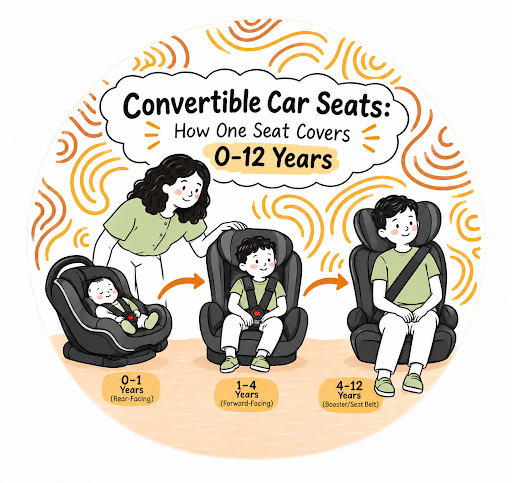
If you're replacing a seat because your child has outgrown it, a convertible car seat that covers several weight groups means fewer replacements over the years.
How to Know When to Replace a Car Seat
Replace the seat if any of these is true:
-
It's past the expiry date (or past its lifespan from the manufacture date)
-
It's been in a crash (see above)
-
Parts are missing, cracked or worn, including harness straps, buckles and padding
-
The buckle sticks or doesn't click firmly
-
The label is gone and you can't confirm its age
-
It's been recalled
-
Your child has outgrown it
A two-minute check you can do tonight:
-
Flip the seat and find the label
-
Read the manufacture date
-
Add the lifespan from the manual
-
Check straps, buckle and shell for cracks, fraying or stiffness
-
Check the base the same way
What to Do with an Expired Car Seat
An expired seat shouldn't ride in a car again, and it shouldn't pass on to someone else either. Someone may not check the date.
Here's how to retire it:
-
Don't sell it, donate it or give it away, even to a friend
-
Make it unusable. Cut the harness straps, remove the cover and write "EXPIRED, DO NOT USE" on the shell in marker
-
Check for a take-back or recycling programme. Ask the brand or the retailer where you bought it. Some brands run trade-in or take-back schemes
-
Dispose of it responsibly. In India, car seat recycling is still limited. Call your local recycler or waste collector, and ask whether they take mixed plastic and metal items.
-
Reuse the parts only if the manufacturer says it's safe
Do All Car Seats Have an Expiry Date?
Almost all do. You may have seen a brand that says its seat has "no expiry date". Be careful with that kind of claim. Ask what the manufacturer says about lifespan in the manual, what standard the seat is tested to and what it says about replacement after a crash. A seat doesn't last forever just because a headline says so.
Whichever seat you choose, ask the brand three things:
-
What is the lifespan, in years?
-
What standard is it certified to?
-
When should I replace it?
Also read: [Why Child Car Seat Safety Matters](ADD LINK)
Common Mistakes to Avoid
-
Counting from the purchase date: the clock usually starts when the seat was made
-
Trusting how it looks: wear on plastic and webbing is often invisible
-
Taking a free seat without checking its history: age, crashes and missing parts matter
-
Leaving the seat in a hot, parked car every day: shade and covers help
-
Ignoring the base: it has its own date
-
Keeping an expired seat "just in case": it ends up in someone's car
-
Selling an old seat online: you'd be passing on a risk
-
Skipping the manual: it has the exact lifespan and crash rules
Making It Simple
You don't need to remember all of this. You need to remember one thing: flip the seat over and read the date.
If it's in date, undamaged, and still fits your child, you're good. If it isn't, retire it and pick a seat that's right for your child and your car. Do it this week, not the week before a long drive.
If you're shopping for your next one, you can Loopie's Car Seats, or explore everything else we make for Indian parents at Loopie.
FAQs: Parents' Most Asked Questions on Car Seat
Do car seats expire?
Yes. Most car seats come with a lifespan set by the manufacturer, usually around 6 to 10 years from the date of manufacture. Check your label and manual for the exact figure.
How long are car seats good for?
Typically 6 to 10 years, depending on the brand and model. The count normally starts from the manufacture date, not the purchase date.
Why do car seats expire?
Plastic can become brittle with heat and sunlight, harness webbing and buckles wear out, foam breaks down, and safety standards and designs improve over time.
Where is the expiration date on a car seat?
Usually on a sticker or stamp underneath the seat, on the back of the shell, or on the base. Look for the date of manufacture and, if there is one, a "do not use after" date.
Is the expiry counted from the manufacture date or the purchase date?
Usually from the manufacture date. Check your manual to be sure, since a few brands explain it differently.
Can I use an expired car seat?
It's best not to. The manufacturer can no longer vouch for how it will protect your child, even if it looks fine.
Does heat damage a car seat?
Heat and sunlight can speed up ageing in plastic, foam, fabric and straps. In India, regular exposure to summer heat and direct sun is one reason to check your seat's age and condition more often.
How do I protect a car seat from Indian heat?
Park in shade, use a sunshade, cover the seat when the car is parked in the sun (and remove the cover before travel), check buckles and metal parts for heat before every ride, and store the seat in a cool, dry place.
Is it safe to use a secondhand car seat?
Only if you know its full history: age, crash record, parts, recalls and storage. If you can't confirm all of that, buy new.
Can I use the same car seat for my second child?
Yes, if it's still in date, has never been in a crash, is complete and fits your child. Check the date again before the second baby arrives.
Do I have to replace a car seat after an accident?
In most cases, yes. Moderate or severe crashes can cause hidden damage. Follow your manual, replace the base if it was in use, and call the brand if you're unsure.
Does a car seat base expire too?
Yes. The base has its own label and date. Check it separately from the seat.
What if my car seat has no label?
Check the manual, then contact the brand with the model and serial number. If you can't confirm its age, replace it.
What should I do with an expired car seat?
Don't sell or give it away. Cut the harness, mark the shell "expired" and ask the brand or retailer about take-back or recycling. If none is available, dispose of it responsibly.
Are there car seats with no expiry date?
Be cautious about that claim. Ask the brand for the lifespan, the safety standard it meets and its crash replacement rules in writing.