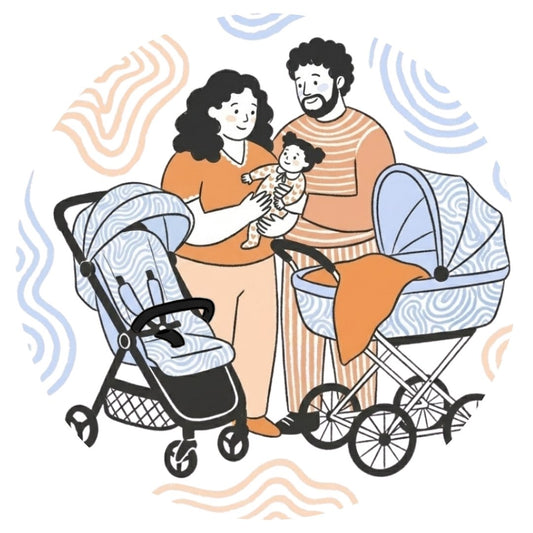
When selecting a baby stroller or pram for your child, look for essential functioning, safety features, build quality, budget and the brand's after-sales service. A good baby stroller in 2026 has a 5-point harness, shock-absorbing wheels, multiple recline positions, a one-hand fold mechanism, and a UV-protective canopy.
This guide is made for parents who are looking to buy a stroller but don't know anything about what makes a good stroller. Reading this, you will learn about important stroller features, their types and budget considerations so that you can choose the perfect stroller for your newborn.

What are your Stroller Options in India?
There are 5 types of stroller options in India that you can consider based on your lifestyle and needs.
-
Full-size strollers for maximum features and durability. Choose these if you need an all-purpose stroller for daily use, plenty of storage space, and a long-term investment. They handle well on various terrains but are heavier and bulkier.
-
Lightweight or umbrella strollers for portability. Choose these for travel, quick trips, or as a secondary stroller. They fold compactly and weigh less, making them ideal for navigating crowded spaces and fitting in small car trunks.
-
Jogging strollers feature three wheels and shock-absorbing suspension. Choose these if you are an active parent who runs or jogs regularly. They provide stability at higher speeds and handle rough terrain smoothly.
-
Travel systems include a stroller with an infant car seat that clicks in and out. Choose these for seamless transitions from car to stroller without disturbing a sleeping baby. They offer excellent value and convenience for new parents.
-
Double strollers are a practical solution for managing two children, offering either a side-by-side configuration for interaction or a tandem (front-to-back) setup for easier navigation.
Also Read: Lightweight vs full-size stroller
10 Features to Look for in a Baby Stroller
A baby stroller is one of the most-used purchases you'll make as a parent. Before you buy, make sure your checks these 10 essential features:
1. 5 Point-Harness
Your baby’s safety is the top priority, and a good stroller should provide a secure and stable ride. Look for a 5-point harness that keeps your baby snugly strapped in, preventing any sudden slips. A sturdy frame ensures the stroller remains well-balanced, reducing the risk of tipping over. Always check for safety certifications, such as the EN 1888-1 certification, confirming that the stroller meets safety standards for child safety.
2. Reliable Brakes
A stroller’s braking system should be easy to engage and reliable. One-step brakes lock both rear wheels with a single push, making them a great option for safety-conscious parents. Some strollers also come with hand brakes, which can be especially useful when going downhill or navigating busy streets. If you often use public transport or live in a hilly area, consider a stroller with an automatic locking mechanism to prevent unintended movement.

3. Full Reclining
If you’re buying a stroller for a newborn, make sure it offers a full reclining option. Newborns need proper neck and head support, so extra ergonomic padding is beneficial.
Read about stroller recline options for Babies
4. Easy and Quick Folding Mechanism
A stroller with a one-hand fold is perfect for busy parents juggling multiple tasks. It must be able to stand unsupported on its own when folded. Some models feature a self-standing design, which means they remain upright when folded—great for storage in small spaces. If you travel frequently, a compact, lightweight fold will make transportation hassle-free.

5. Extra Storage
A stroller with ample storage makes outings much more convenient. Under-seat baskets provide space for diaper bags, groceries, and personal items. Some models also include zippered pockets or mesh compartments behind the seat for easy access to smaller essentials, such as snacks and wipes. The best storage solutions are easily accessible without requiring you to move your baby or dig through multiple compartments.

6. Lightweight and Strudy Frame
The frame of a stroller determines its weight, sturdiness, and longevity. Aluminum frames are lightweight yet strong, making them a great choice for parents who need something portable. Steel frames, while heavier, offer excellent durability and stability. Look for shock absorption features that help smooth out bumps and uneven terrain, ensuring a comfortable ride for your baby.
7. Extended Canopy
A good canopy provides UV protection, shields against light rain, and keeps your baby comfortable in different weather conditions. Look for ventilation panels that allow airflow, preventing overheating. Many modern strollers also feature a peekaboo window, so you can check on your baby without disrupting their nap.

8. High Weight Capacity
A stroller's weight capacity is a critical safety factor for long-term outdoor use. While most standard models cap at 15 kg, choosing a reinforced frame rated for at least 22 kg ensures the stroller grows with your child. High-capacity models feature impact-resistant joints that maintain structural integrity on bumpy roads, preventing frame flex or steering failure. Always verify the manufacturer’s limit to ensure your gear remains a stable, reliable tool as your toddler gets heavier.
9. Large Wheels and Good Suspension
The right wheels make all the difference in handling. Large rear wheels improve stability, while swivel front wheels enhance manoeuvrability. Shock-absorbing suspension systems help smooth out rough terrains, making rides more comfortable for your baby. Choose between EVA foam wheels (lightweight but best for city roads) or air-filled rubber wheels (ideal for rough terrain).

10. Safety Certifications
Prioritize strollers with clear safety certifications, such as ASTM F833 (USA), BS EN 1888 (UK), or the rigorous EN 1888-2:2018+A1:2022 (Europe). These labels ensure the gear has passed rigorous testing for structural integrity, stable braking systems, and secure five-point harnesses. Verifying these credentials confirms the product meets essential safety protocols to protect your baby from potential mechanical failures or tipping hazards.
How to Test if a Stroller is Good Before Buying?
Most stroller problems only show up after weeks of daily use. Knowing what to check before buying saves parents from expensive replacements and safety risks down the line. Here is what to test in-store or at the time of delivery.
1. Check the frame for flex: Push down on the handlebars and apply light sideways pressure to the frame. A good stroller frame, typically made of aluminum alloy, should feel completely rigid. Any twisting or bowing points to weak joints or low-grade materials that will not hold up on uneven Indian roads or curb drops.
2. Inspect the wheel and folding joints: Look closely at where the wheels attach and where the frame folds. These joints should have metal reinforcement and sealed bearings, not thin plastic-on-plastic contact points. Plastic-only joints grind down quickly in dusty conditions and will seize up or become hard to steer within months of regular use.
3. Test the seat backrest: Press against the seat back from behind. It should feel firm, not fabric-only. A seat without a rigid internal board causes the baby to slump into a hammocked position, which puts pressure on the developing spine and can restrict airflow during naps.
4. Look at the folding hinge design: Open and close the stroller slowly and check where the hinges are exposed. Large open scissor hinges at folding points are a pinch and entrapment risk for small fingers. Safe stroller designs use covered or guarded hinges that close without leaving accessible gaps.
5. Test the wheelbase stability: With the stroller empty, lightly press down on the handlebar from behind and simulate a sharp turn. A stroller with a poorly calculated center of gravity will feel tippy or unstable. A wide, balanced wheelbase keeps the stroller grounded even when the baby shifts weight or leans sideways.
6. Verify safety certifications: Check the stroller frame or packaging for a physical EN 1888, ASTM, or CPSC certification label. These certifications confirm that the stroller has passed independent stress testing for brake hold on slopes, harness strength, and structural durability. A stroller without verified certification has no guaranteed safety baseline.
Important Considerations Before Finalizing a Stroller
Specs tell you what a stroller can do, not whether it will work for your life. Here is what most Indian parents only realize after buying.
1. Car boot space: Measure your car boot before buying. Most sedans and hatchbacks common in India have significantly smaller trunks than SUVs, and many full-size strollers will not fit without folding the rear seat down.
2. Home storage: In a 2BHK, floor space is limited. Choose a stroller with a vertical self-standing fold so it can sit in a corner without blocking a hallway or taking up a full wall.
3. Apartment lift size: Standard elevator dimensions in Indian high-rises are narrow, and many full-size strollers will not fit through the door. A compact fold width matters more than most parents expect until they are stuck at the lift.
4. Who else will use it: If grandparents or household help will take the baby out regularly, they need to operate the stroller comfortably, too. A heavy frame or multi-step fold that works for you may be difficult for an elderly caregiver to manage alone.
5. Resale value: Strollers from established brands hold resale value significantly better. A ₹12,000 stroller that resells at ₹6,000 after a year is a smarter long-term buy than a ₹6,000 stroller with no secondhand market.
Does a Higher Price Always Mean a Better Stroller?
Not necessarily — but price does matter when it comes to build quality, safety standards, and long-term durability. A well-priced stroller with the right features will always outperform a cheap one that wears out in months.
That said, spending more doesn't always mean getting more. Beyond a point, you're paying for brand name and aesthetics rather than meaningful upgrades in safety or functionality. The key is knowing what features your baby actually needs — and finding a stroller that delivers exactly that, at a price that makes sense for your family.
Read our guide to know the difference between a stroller and a pram
Best Baby Strollers in India
1. Loopie Hop Baby Stroller | ₹17,999
The Loopie Hop features a one-hand fold and a lightweight aluminum frame, making it perfect for both city errands and travel. It supports up to 22 kg, has multiple recline options and is built with UV-protective fabric to handle the Indian sun.
2. Chicco Goody XPlus | ₹22,491
The Chicco Goody XPlus is known for its OneTouch automatic folding mechanism and high-quality shock absorbers on all wheels. It is also suitable from birth up to 22 kg, providing a smooth ride on various surfaces.
3. Joie Litetrax 4 | ₹35,999
The Joie Litetrax 4 is a sporty 4-wheeler with a one-hand instant fold tucked in the middle of the seat. It features a large expandable hood and a spacious storage basket, ideal for long day trips.
4. StarAndDaisy Ultra Premium Coballe | ₹10,999
This stroller is highly rated for its reversible handle and large rubber tyres, making it very durable for Indian roads. It also features a 5-point safety belt and a one-hand fold mechanism.
5. Chicco Mini Bravo Plus | ₹42,915
The Chicco Mini Bravo Plus is a lightweight yet premium travel system. It features a parent tray with cup holders, a zippered storage pocket, and stands on its own when folded for easy storage.
You can read our article on Which Baby Stroller is Best for Parents?
Why Choose the Loopie Hop Stroller?
The Loopie Hop is built for parents who want a premium stroller without paying an import price. Here is what makes it worth considering.
Frame and build: Lightweight aluminum frame with breathable Oxford cotton fabric, designed for daily use on Indian roads.
One-hand fold: Folds and unfolds with one hand, which matters when you are holding the baby with the other.
Safety: Five-point harness, adjustable footrest with infant safety barrier, and tested to international EN 1888 certification standards.
Suspension: Luxury suspension that handles uneven pavements, speed bumps, and city terrain without rattling the baby.
Availability: Available in stores across major Indian cities, including Mumbai, Delhi, and Bangalore, with fast delivery and no long wait times.
Support: Direct customer support with real people, free part replacements, and repair.
So buy the best baby stroller from Loopie!!
Conclusion: Finding the Perfect Stroller
The perfect stroller depends on your lifestyle, your baby’s needs, and your daily routine. Whether you need a lightweight travel stroller or a feature-packed option, prioritizing safety, comfort, and durability is key.

A well-chosen stroller makes every outing smoother, safer, and more enjoyable for both you and your baby. Happy strolling with Loopie!
Frequently Asked Questions (FAQs)
Where are the best places to buy a baby stroller?
You can purchase strollers through official brand websites like Loopie or Chicco, or major marketplaces like Amazon India, Flipkart, and Tata CLiQ Luxury. For hands-on testing, visit multi-brand physical stores.
How do I choose the right stroller for my lifestyle?
Identify your primary environment: compact, one-hand fold models are ideal for urban navigation, while all-terrain wheels suit suburban parks. Consider your car’s boot space and whether you need a travel system.
How many strollers do I actually need?
Most families find two strollers ideal: a full-sized travel system for newborns and long outings, and a lightweight umbrella or cabin-friendly stroller for quick errands, public transport, and air travel.
What is the average cost of a high-quality baby stroller?
In the Indian market, reliable strollers typically range from ₹5,000 to ₹15,000. Premium models or comprehensive travel systems with advanced safety certifications and multi-terrain suspension can range between ₹20,000 and ₹50,000.
What are the must-check features when buying a stroller?
Prioritize a 5-point safety harness, reliable linked brakes, and EN 1888 certification. Additionally, check for a multi-position recline, UV-protected canopy, and a sturdy frame that supports at least 22 kg for longevity.