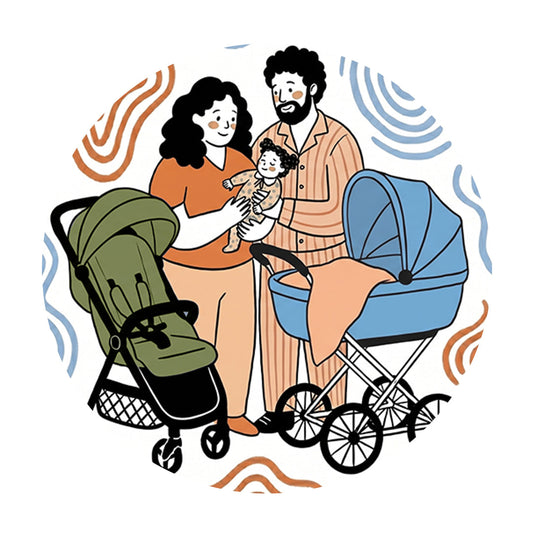
For most new parents in India, pram and stroller are used as the same word, but they are two distinct products designed for very different stages of your baby's development. A pram is built for newborns who need to lie completely flat, while a stroller is designed for older babies who have developed head control and can sit upright. The difference comes down to posture, age suitability, and how you plan to use it day to day.
Choosing the wrong one too early or too late, can affect your baby's comfort, safety, and your own convenience on every outing.
This guide breaks down everything Indian parents need to know — from definitions and key differences to when to switch, and what to look for if you want one product that does both.

Note: This is not medical advice. Consult your paediatrician regarding your baby's specific developmental needs and spinal health.
What is a Pram?
A pram (short for perambulator) features a deep, sturdy bassinet designed for a baby to lie completely flat. Because newborns cannot support their own heads or sit up, this horizontal position is vital for open airways and healthy spine development. Prams are typically sturdier, featuring larger wheels and a "parent-facing" orientation, allowing you to keep a constant eye on your infant during those first six months.

What is a Stroller?
A stroller (or pushchair) is designed with an upright or multi-recline seat, usually featuring a 5-point safety harness to secure an active child. While many modern strollers offer a "near-flat" recline, they are primarily built for babies who have achieved head control and want to face the world. These are generally more lightweight, offer a compact "umbrella" or "one-hand" fold, and are much easier to manoeuvre through narrow store aisles or lift into a car trunk.

Difference Between Stroller and Pram
Prams and strollers differ across five key areas that directly affect your buying decision. Here is a quick comparison, followed by a detailed breakdown.

1. Age Suitability and Support
Prams are built specifically for newborns (0–6 months). They feature a flat bassinet that supports a baby’s developing spine and keeps their airways open. Strollers are intended for older babies and toddlers who have gained head control and can sit upright safely.
2. Seating Position and Direction
In a pram, the baby always lies horizontally and usually faces the parent for constant monitoring. Strollers feature upright, multi-recline seats that usually face forward, allowing curious toddlers to see the world around them.
3. Weight and Portability
Prams tend to be heavier and bulkier because of their sturdy frames and large, shock-absorbing wheels. Strollers (especially "umbrella" models) are designed to be lightweight and compact, making them much easier to fold and store in small car trunks or carry on public transport.
4. Safety Harness Systems
Because a baby lies flat in a pram, they often rely on the high, protective sides of the bassinet. Strollers require a 5-point safety harness to keep an active, sitting child securely strapped in, preventing them from leaning out or sliding down.
This guide discusses how to use a baby stroller safely.
5. Longevity and Versatility
A traditional pram has a short usage window, as babies outgrow the bassinet by 6 months. Strollers offer much more longevity, often lasting until a child is 3 or 4 years old. Many modern "travel systems" now combine both, allowing you to swap a bassinet for a seat as your child grows.
When to Use a Pram Over a Stroller?
Parents should use a pram right from day one up to about 6 months (or until your baby starts sitting independently with steady head control). Prams shine in those precious early months when your newborn sleeps a lot and needs the safest, most supportive position possible.
Prams are particularly well-suited for the following everyday situations:
-
Newborn naps and short outings: Morning and evening walks in your apartment complex or society park, where the baby can sleep undisturbed on a flat, secure surface.
-
Indian summers and monsoons: Enclosed prams with mesh ventilation and rain covers offer better protection from direct sun, humidity, and sudden showers than open stroller seats.
-
Early bonding outings: The parent-facing orientation lets you maintain eye contact and monitor your baby continuously, which matters most in the first few months.
Some parents in r/twoxindiamums called prams "lifesavers" for these early phases. One mom shared how hers made peaceful early morning walks possible despite bumpy paths, letting her baby nap deeply while she got fresh air and a bit of me-time.

Benefits of Pram for Newborns
A pram's flat bassinet directly supports two critical needs in a newborn: open airways and healthy spinal alignment. Newborns sleep between 16–18 hours a day, and a fully flat surface ensures their neck, back, and hips rest in a natural position without any postural strain.
An inclined or semi-upright seat during this stage can cause the head to drop forward, partially compressing the airway — a risk that is highest in the first 4 months before neck muscles develop adequately.
Pediatric guidelines consistently recommend the fully flat position for infant sleep and rest, and a pram is one of the few baby gear products designed with this as its primary function.
For Indian parents navigating daily outings, morning walks, or extended family visits in the early months, a pram effectively serves as a portable, wheeled bassinet — keeping your newborn safe and comfortable outside the home.

When to Use a Stroller Over a Pram?
A stroller becomes the practical choice from around 6 months, once the baby has developed steady head control and can comfortably sit upright. At this stage, babies are more alert and engaged with their surroundings so a forward-facing stroller seat supports that curiosity while keeping them safely harnessed.
That said, the 6-month rule applies to traditional strollers with fixed or limited recline. Many modern strollers, including the Loopie Hop, offer a fully flat recline position that makes them suitable from birth. It becomes a product that covers both the newborn and toddler stage, eliminating the need to buy a separate pram altogether.
For Indian parents weighing cost and practicality, a stroller with a full flat recline is often the more versatile long-term investment.

Benefits of Stroller
A stroller is the most sensible option for everyday life starting at six months of age because it is made for the period when your kid is awake, active, and involved. During this stage, the upright or multi-recline seat directly promotes your baby's visual and cognitive development by supporting their developing posture and providing a clear view of their surroundings.
For the majority of Indian metropolitan contexts, strollers are a practical advantage because they are much lighter and more compact than prams, making them easier to fold, carry in a car boot, or manoeuvre through crowded areas like malls, marketplaces, and public transport. An energetic, wiggling baby is kept firmly in position without compromising comfort thanks to the 5-point safety harness.
Longevity is another key advantage. While a pram is outgrown by 6 months, a good stroller typically lasts until your child is 3–4 years old. For families looking for a single long-term investment, a stroller with a flat recline option effectively covers both the newborn and toddler stages without needing a separate product.
When to Switch From Pram to Stroller?
Most babies are ready to transition from a pram to a stroller between 4 and 6 months. The clearest sign is consistent head control. When your baby can hold their head up steadily without support and shows interest in looking around, a semi-upright or reclining stroller seat becomes both safe and more engaging for them.
There is no fixed date to switch, as every baby develops at their own pace. A practical approach many Indian parents follow is using the pram for longer naps and outdoor walks, while gradually introducing the stroller in a reclined position during alert, wakeful periods.
This eases the transition without disrupting your baby's comfort or routine.If you are using a stroller with a full flat recline from birth, the switch is simply a matter of adjusting the seat position as your baby grows, with no second product required..

Pram or Stroller: Which Should You Buy?
Both strollers and prams serve important roles for newborns, but new hybrid strollers with full recline features are making prams less necessary. These hybrids offer the advantages of both: they are ideal for newborns and practical for active toddlers. Many urban families consider them the smart choice for their convenience and versatility.
Here are some reasons why hybrid strollers are the best option for new parents:
-
It grows with the baby: It transitions from a flat newborn bassinet to an upright toddler seat. You won’t need to buy a second stroller once your baby reaches 6 months.
-
Built for Indian Roads: Hybrids feature all-wheel suspension and larger wheels. They handle potholes and uneven sidewalks much better than basic, lightweight strollers.
-
Fast and Easy Folding: Despite being sturdy, they are designed with "one-hand" or "compact" folds. This makes it simple to fit them into small car trunks or carry them up apartment stairs.
-
Total Weather Protection: Equipped with UPF 50+ canopies and mesh ventilation, they keep your baby cool in the summer heat and protected during sudden monsoon rains.
-
Maximum Safety Standards: These models are EN-certified, meaning they have been tested for stability, secure 5-point harnesses, and non-toxic materials for your peace of mind.
You can read our guide on top strollers and stroller brands in India to find some of the best newborn-friendly stroller options.

Frequently Asked Questions (FAQs)
What is the main difference between a pram and a stroller?
A pram features a flat bassinet for newborns to lie down safely and comfortably. A stroller has upright or reclining seats for older babies who can sit up and explore the world around them.
Is a newborn stroller safe?
Only if it fully reclines to a flat position or includes a bassinet/carrycot attachment. Otherwise, start with a dedicated pram to ensure proper support for your newborn's breathing and spine.
Which is better for Indian cities- stroller or pram?
Strollers often work better for air travel, and quick maneuvers on uneven roads. Prams excel for early newborn naps; many urban parents prefer hybrids for the best of both worlds.
Are strollers worth it in India?
Yes, especially for daily walks, mall trips, or train commutes. Parents in cities share how they make family outings easier and more enjoyable, boosting sanity and bonding time.

Beginning a new journey!
The difference between a pram and stroller comes down to your baby's age and your daily rhythm. Prams nurture newborns with flat comfort; strollers empower growing toddlers with mobility. In India's vibrant urban life, versatile, safe, BIS-certified options make every stroll special.
Prioritize what brings joy—safe adventures, sunny parks, or cozy naps. Explore trusted brands like Loopie for all-terrain features many parents love. Your little one's next outing awaits—happy strolling!