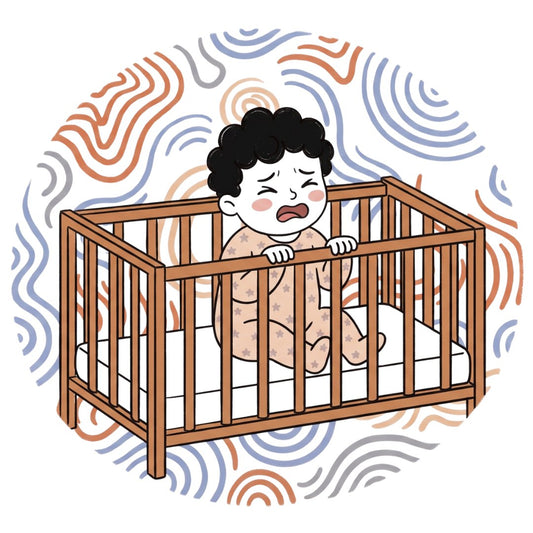
That sudden arm fling when your newborn startles mid-sleep – it can catch you completely off guard the first time. Many parents notice it during busy evenings when someone gently lowers the baby into the crib after a family cuddle, or when the ceiling fan clicks on in the next room. This is the Moro reflex in newborns, also called the startle reflex in newborns.
It is a completely normal part of early development and a reassuring sign that your baby's nervous system is doing exactly what it should.
In lively Indian homes – from urban apartments to joint families in smaller towns – everyday sounds like a pressure cooker whistle or a door closing can trigger it. The good news is that it fades naturally as your baby grows stronger and more coordinated.
Understanding the Moro reflex in an infant helps you respond with confidence instead of worry. This guide is for new parents and caregivers in India who notice their baby’s sudden startles and jerks and want simple, reassuring answers about the Moro reflex.

What to Keep in Mind
The startle reflex in newborns is normal, symmetrical, and gradually disappears. It should feel balanced on both sides and become less noticeable over time. Preterm babies might show a milder version, which is perfectly fine in most cases. This article shares general parent education only. Always chat with your paediatrician for anything specific to your baby's journey.
What is the Moro Reflex (Startle Reflex)?
The Moro reflex, or startle reflex in babies, is one of the primitive reflexes babies are born with. It acts like a built-in safety response. When your baby feels a sudden sensation of falling, hears a loud noise, or experiences a quick movement, their arms fling outward with palms open and fingers spread. The head may tilt back slightly, then the arms come back in – often with a little cry.
It is an involuntary response that shows healthy early brain and nerve development. Think of it as your baby's automatic "I've got this" signal in those first fragile weeks.

When Does the Startle Reflex Begin?
The Moro reflex in newborns is present right from birth in full-term babies. According to the Cleveland Clinic, it can even be observed as early as 25–30 weeks in a baby's development in utero. In preterm infants, it may look softer due to lower muscle tone; this is usually normal and something your doctor will track during check-ups.
What Does the Startle Reflex Look Like?
A Moro Reflex in Babies Example:
Picture this: your baby is drifting off, and a sudden sound makes their arms shoot out wide like a little star, fingers opening fully. The back arches just a touch, then the arms hug back toward the body. Some babies cry briefly; others settle quickly. This classic Moro reflex in babies happens symmetrically on both sides when the reflex is healthy.
Many parents describe it exactly this way in parenting forums – one mom shared how her two-week-old would fling arms repeatedly while sleeping, and fellow parents quickly reassured her it was the typical baby startle reflex, entirely expected.

What Causes the Startle Reflex in Newborns?
Common startle reflex newborn causes include:
-
The feeling of falling (even from gently lowering into the crib).
-
Sudden loud noises – door slams, TV volume spikes, speakers or kitchen sounds.
-
Quick changes in head position or body support.
In typical Indian households, triggers often come from daily life: utensils clattering, being passed lovingly between family members, or during monsoon season when sudden thunder can startle a dozing newborn. These moments feel very big to a baby whose world is still so new. Understanding what causes the startle reflex in newborns takes the worry out of these everyday surprises.
Startle Reflex in Newborns While Sleeping
The startle reflex in newborns while sleeping is very common and often wakes babies and tired parents at the worst times. Your little one may jerk suddenly and cry out just as they drift off. This happens because the nervous system is still maturing, and even their own cry can sometimes trigger it again. It is one of the most common things new parents notice and search for in those early weeks.

Moro Reflex vs Other Infant Reflexes
Newborns come with several helpful primitive reflexes. Here is how the Moro stands apart:
-
Rooting reflex: Baby turns toward a touch on the cheek – perfect for feeding.
-
Sucking reflex: Automatic sucking when something touches the lips.
-
Grasping reflex: Fingers close tightly around a finger placed in the palm.
-
Stepping reflex: Legs make walking motions when feet touch a surface.
The Moro reflex is the full-body startle one, different because it responds to surprise rather than touch or feeding cues. Knowing these differences brings genuine reassurance when you spot them during play or care routines.
Comforting Your Baby During the Startle Reflex
Gentle handling works wonders. Support your baby's head and neck fully when lifting or lowering them. Move slowly and speak in a soft, soothing voice. A calm, dimly lit room with fewer sudden sounds helps too. If the jerk wakes them, skin-to-skin contact, gentle rocking, or feeding often settles things quickly. These small steps help your baby feel secure while the reflex does its natural job.

Managing the Moro Reflex Day to Day
You do not need to stop the reflex – it is a healthy part of growth. Focus on creating a predictable routine with slow, supported movements. Many parents find that keeping the sleep area quieter, perhaps with soft white noise if it suits your home, reduces common triggers. As your baby gains head and body control, the reflex naturally quiets down on its own.
Swaddling and the Moro Reflex in Babies
Swaddling can help some babies feel snug and womb-like, limiting arm flings so everyone sleeps a bit better. In India's warm and often humid weather, choosing breathable fabrics matters – always keep hips loose for healthy development (hip-safe swaddling). Stop swaddling as soon as your baby shows signs of rolling, usually around 2–4 months, and follow safe sleep practices: baby on their back, firm flat surface, no loose bedding.
Loopie's sleep-support items are designed with these real-life needs in mind, offering comfortable, breathable options many families appreciate for exactly this stage.
When Does the Startle Reflex in Babies Go Away?
Most parents ask: when does the Moro reflex go away? According to Stanford Medicine, the startle reflex in babies usually starts fading around 2–3 months and is typically gone by 4–6 months, though every baby moves at their own pace. By then, your little one has better control over their movements, and the reflex integrates into more mature responses.

Moro Reflex in Newborns: How to Check
Paediatricians check the Moro reflex in newborns during visits by gently supporting the baby and allowing a brief, controlled shift in head position, then catching them safely. At home, you will likely notice it naturally during everyday care. Never try to test or force it yourself – symmetry and timing matter most, and those are best assessed by your doctor.
When to Speak to a Paediatrician
Most of the time, the Moro reflex is a positive sign. Do reach out to your doctor if:
-
The reflex is absent on one or both sides
-
It looks clearly stronger or weaker on one side (asymmetry)
-
It remains very noticeable well after 6 months
-
Your baby seems unusually floppy, feeds poorly, or shows other changes
For preterm babies, a milder reflex is often expected – your paediatrician will guide you. Early conversations always bring peace of mind.
Retained Moro Reflex in Older Children
In rare cases, if the reflex persists strongly beyond infancy, it may be linked to broader developmental questions. If an older child seems overly sensitive to sounds or sudden movements alongside other concerns, a paediatric assessment helps clarify things. Most babies outgrow it beautifully within the expected window, and this is very much the norm.
For more such interesting reads, explore our guide on Best Foods for Baby Brain Development.

FAQ: Most Asked Questions About Moro Reflex
Is the Moro reflex normal in newborns?
Yes. It is a healthy, protective response present from birth. It shows your baby's nervous system is developing well and fades on its own over the first few months.
Why does my baby jerk while sleeping?
This is the startle reflex in newborns while sleeping. Sudden arm movements are a normal part of nervous system development. Gentle routines and safe comfort measures usually help settle things.
Can swaddling reduce the startle reflex?
Swaddling may help some babies feel more secure and reduce flailing. Always swaddle safely – hips free, baby on their back on a firm surface — and stop when rolling begins.
When does the startle reflex in babies go away?
It typically starts fading by 2–3 months and is usually gone by 4–6 months. Most babies outgrow it naturally in the first half-year.
Is it normal if one arm moves less during the reflex?
The Moro reflex should look symmetrical. If one side seems weaker or different, mention it at your next paediatrician visit for reassurance.
Should I worry if my baby startles a lot?
Frequent startling is common in the early months, especially in lively homes. Focus on calm handling and gentle routines. If other concerns appear, your doctor is the right person to check.

Towards a Bright Future!
The Moro reflex in newborns is a normal, temporary part of your baby's beginning. It protects them, signals healthy development, and quietly fades as they grow stronger – usually by 4–6 months. With gentle care, predictable routines, and plenty of love, these startling moments grow fewer, and joyful milestones take centre stage.
You are doing an amazing job navigating life with a newborn. Trust your instincts, enjoy the cuddles, and reach out to your paediatrician whenever you need that extra layer of guidance. Every baby's journey is special, and yours is unfolding just right.