As of September 2026, IndiGo charges ₹3,000 per infant per flight sector (up from ₹2,000), and most Indian airlines require a birth certificate plus vaccination certificate for infants aged 3 days to 2 years. Strollers travel free on every major Indian carrier but are almost always gate-checked rather than carried into the cabin. Car seats, diaper bags, and documentation all have real, specific rules that change by airline; this guide covers what's actually confirmed, not what sounds confirmed.
Flying with a baby in India already means juggling a diaper bag, a stroller, and a small human who didn't agree to any of this. What it shouldn't mean is guessing at the rules. Airline fees just changed, documentation requirements aren't identical across carriers, and a lot of what's floating around online is outdated or simply wrong. This guide sticks to what's actually verified.
What Are India's Current Airline Rules for Flying With an Infant?
Short answer: infants aged 3 days to 2 years travel on an adult's lap, need real age documentation, and now cost more on India's largest carrier than they did a month ago. As of September 2026, IndiGo raised its domestic infant fee by 50%, from ₹2,000 to ₹3,000, charged per flight sector, not per trip. That means a simple round trip with an infant now costs ₹6,000 in fees alone, before the actual airfare.
Why Did Flying With a Baby Just Get More Expensive?
IndiGo hasn't attributed the increase to a specific cost driver; it's part of a broader revision to ancillary charges that also raised excess baggage fees from ₹700 to ₹800 per kg, and priority check-in (Fast Forward) from ₹450 to ₹650. For families already travelling with extra baby gear, that baggage fee increase stings a little more. Strollers and car seats usually travel free, over and above your standard allowance, so they don't eat into your weight limit, but a bag full of baby essentials still does, and that is where families tend to creep past the limit and get caught by the higher per-kg charge.
|
Fee |
Old Rate |
New Rate (Sept 2026) |
|
Infant fee (per sector) |
₹2,000 |
₹3,000 |
|
Excess baggage (per kg) |
₹700 |
₹800 |
|
Priority check-in |
₹450 |
₹650 |
What Documents Do I Need to Fly With My Baby?
Every major Indian airline requires proof of age for an infant, and the standard documentation, confirmed directly from Air India's official guidance, is:
-
Birth certificate of the baby
-
Vaccination certificate of the baby
-
Passport, mandatory for international travel
Without valid proof of age, airlines can charge a full adult fare for the infant, subject to seat availability, not a small technicality if you've turned up at the airport without the right paperwork. For a fuller breakdown of what counts as valid ID for a newborn specifically, see our baby travel documents guide.
What If My Baby Is Under 7 Days Old?
This is handled as a special case, not standard travel. Airlines generally require a medical certificate signed by a paediatrician confirming the infant is fit to fly, along with prior clearance from the airline's own medical department. If you're considering air travel with a very young infant, contact the airline directly well before booking; this isn't something to sort out at the check-in counter.
How Many Infants Can Travel With One Adult?
Just one. If you're travelling with more than one child under two, each additional infant needs their own accompanying adult aged 18 or older, and all infants must be booked in the same cabin and fare class as their accompanying adult for every leg of the journey.

Is There a Bassinet on My Flight?
Most full-service carriers offer bassinets free of charge, but "subject to availability" is doing real work in that sentence. Bassinets are limited in number per aircraft, allocated to bulkhead-row seats, and typically capped around 10-11kg and roughly 6 months of age, though the exact weight limit varies by airline and aircraft type. Request a bassinet at the time of booking or during check-in, and if it genuinely matters for your trip, follow up closer to your travel date to confirm the allocation actually holds, seat and equipment assignments can shift with aircraft changes.
What's the Real Stroller Policy on Indian Flights?
Here's the honest version: strollers travel free on every major Indian airline, but almost all of them get gate-checked, not carried into the cabin. Gate-checking means you use the stroller right up to the aircraft door, hand it over there, and it's typically returned to you at the aircraft door on arrival too, not lost in the general baggage claim scrum.
A small number of very compact, lightweight strollers under specific weight and fold-size limits may qualify for cabin storage on select airlines, but this varies by carrier, aircraft, and even individual gate agent discretion. It's not something to count on without confirming directly with your airline beforehand. For a deeper dive specifically into how baggage allowance rules apply to strollers, see our stroller and infant baggage allowance guide.
Should I Buy a Premium Baby Stroller Specifically for Travel?
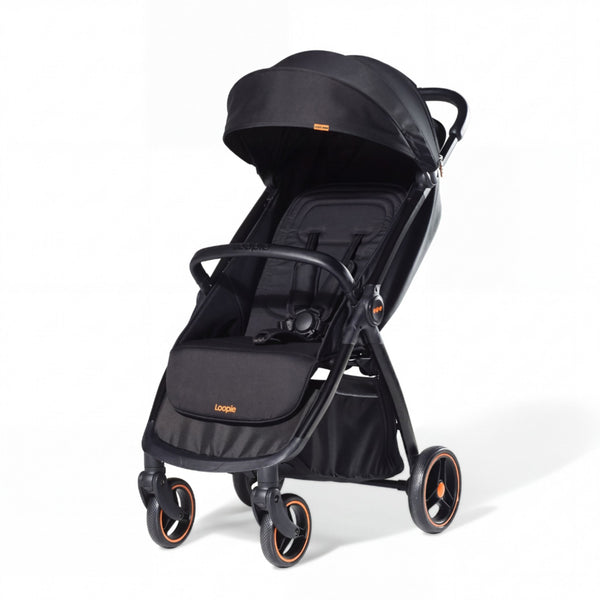
If you fly with any regularity, yes, and the reasoning isn't about the cabin-vs-gate-check question; it's about what survives repeated handling. A genuine premium baby stroller is built to handle being folded, loaded, unloaded, and occasionally handled less than gently by airport ground staff, over and over, without the frame loosening or the wheels wearing out. A budget stroller that's fine for the occasional mall trip often doesn't hold up to that kind of repeated real-world stress.
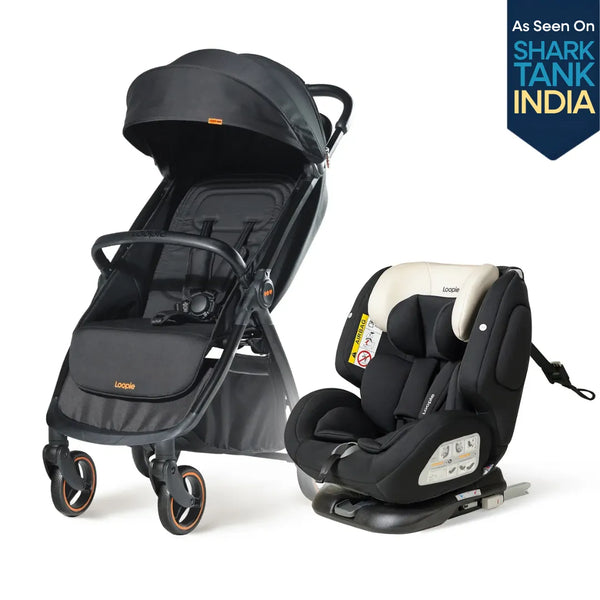
The Loopie Hop is a genuine example of this kind of build: a 6000-series aluminium frame at 8.4kg, EVA rubber wheels that handle uneven terminal floors and cobblestone drop-off zones alike, and a one-hand fold that matters enormously when you're managing a baby, boarding passes, and a gate agent all at once. Worth being upfront: at 8.4kg, this is a full-size stroller, not a compact travel one, built for durability and comfort rather than cabin storage, so plan on gate-checking it rather than carrying it into the cabin, which is genuinely the normal experience for most families anyway.
Can I Bring a Car Seat on the Plane?
Yes, if you've purchased a separate seat for your child. Infants under two travelling on a lap don't need one for the flight itself, but if you want the added safety of a car seat in the air, or you're travelling with a child who already has their own ticket, an FAA or EASA-approved car seat can be installed directly onto the aircraft seat. It generally needs to be forward-facing and fit within standard narrow-body seat width.
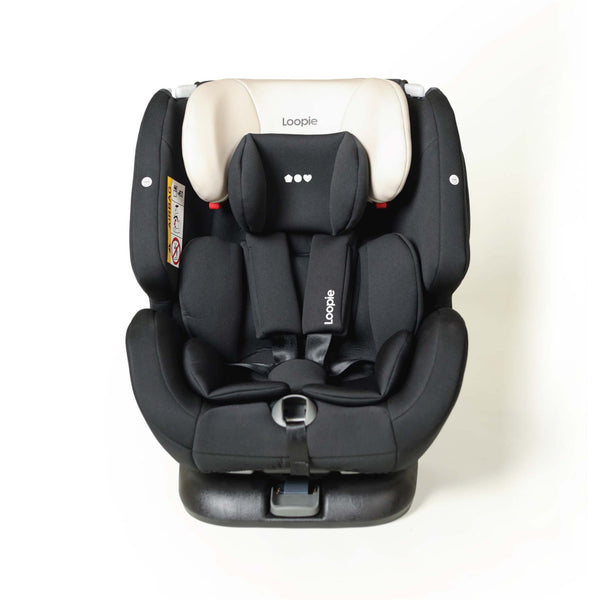
A genuinely versatile car seat pays off across every ground leg of the trip. The Loopie Lap is UN ECE R44/04 certified, with a 5-point harness and coverage across Groups 0+ to 3, so the same seat protects your child in the airport transfer, the rental car, and the cab at your destination, instead of hiring or buying a separate restraint for each leg. And because car seats and child restraint devices typically travel free as checked baggage on Indian carriers, over and above your standard allowance, you can check it in for the flight and have it ready the moment you land. If your car seat's been through baggage handling and multiple installs on a trip, it's worth running through our car seat safety checklist before its next use.

What Should Be in My Flight-Day Diaper Bag?
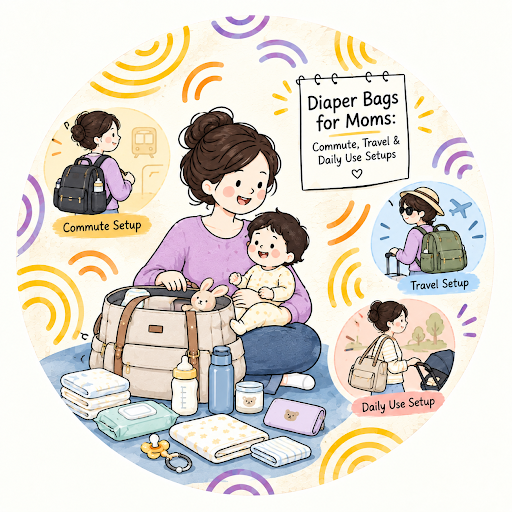
Flying adds real constraints a normal day out doesn't, tighter security screening, no easy access to your check-in bag mid-flight, and a strong chance of at least one time-pressured nappy change in a cramped airplane bathroom. A diaper bag that's just one big pouch makes all of that genuinely harder. Our guide to packing a diaper bag for different trip lengths covers this in more depth if you're travelling beyond just the flight itself.
What to actually pack:
-
Diapers, roughly one per hour of flight time, plus several extra for delays
-
Two full changes of clothes for the baby, one spare top for yourself
-
Formula or expressed milk, pre-measured where possible
-
A pacifier or something to encourage swallowing during takeoff and landing
-
A lightweight blanket or comforter
-
Basic medication (as advised by your paediatrician) and a digital thermometer
-
A disposable changing mat and a ziplock bag for anything soiled
Baby food, breast milk, and formula in reasonable quantities are exempt from standard liquid restrictions at Indian airport security, just declare them at the screening point.
What Makes a Diaper Bag Actually Work for Travel?
Genuine compartmentalization, not a single large pouch, is what actually helps here. When you are mid-change in a tiny airplane lavatory with a fussy baby, you do not have time to dig, you need to know exactly which pocket has the wipes. The Loopie Robin is built around this, with 19 separate compartments, so diapers, wipes, bottles, and spare clothes each have a fixed place instead of getting buried under everything else. The full zip opening across the front helps just as much in that cramped space, because the bag lays open in one motion and you can see everything at a glance rather than fishing around through a narrow top. And the attached changing mat means you are not hunting for a clean surface in a cramped lavatory, you just unfold it, sort the baby out, and fold it back, with no separate mat to pack, misplace, or set down on a questionable counter.
Managing Ear Discomfort During Takeoff and Landing
Swallowing helps equalise ear pressure, so feeding, nursing, or offering a bottle during takeoff and especially during the final descent genuinely helps. For toddlers, a sippy cup or something that encourages chewing works similarly. If your baby is asleep, there's usually no need to wake them just to feed, sleep itself tends to reduce awareness of the pressure change.
If your infant has an active ear infection or significant nasal congestion, it's worth checking with a pediatrician before flying, descent can be genuinely uncomfortable, and in rare cases risky, under those conditions.
Packing and Bundling for a Flight, Efficiently
If you are assembling your travel kit around the same time, buying a stroller and car seat together is genuinely worth checking, since it typically costs less than buying each at full price separately. The Loopie Hop + Lap bundle covers both in one purchase, useful if you are preparing for a first trip and do not already have either piece sorted. Just note that the car seat is designed for use in cars and cabs, not on the plane itself. Economy cabin seats on Indian carriers are narrow, so if you are hoping to use a car seat in-flight, check the seat's base width against the specific airline and aircraft first, and plan to gate-check it and use it for your ground transfers instead.
Frequently Asked Questions
How much does it cost to fly with an infant in India now?
On IndiGo's domestic routes, the infant fee is ₹3,000 per sector as of September 2026, up from ₹2,000. This is charged per flight leg, so a round trip totals ₹6,000 in infant fees alone. Other airlines set their own rates independently.
What documents do I need to fly with my baby in India?
A birth certificate and a vaccination certificate are standard requirements for infants aged 3 days to 2 years. A passport is additionally required for international travel.
Can I take my stroller all the way to the aircraft door?
Yes, on most major Indian carriers — this is called gate-checking. You use the stroller through the airport and security, hand it over at the aircraft door, and it's typically returned to you at the aircraft door on arrival.
Do strollers count toward my baggage allowance?
No. Strollers, along with car seats and typically one diaper bag per infant, generally travel free and don't count against your standard baggage allowance on major Indian carriers, though it's worth confirming your specific airline's current policy.
Can I bring my own car seat on a flight?
Yes, if you've purchased a separate seat for your child, an FAA or EASA-approved car seat can usually be installed on the aircraft seat. If your infant is travelling on your lap, a car seat isn't required for the flight itself.
What's the best diaper bag for flying with a baby?
Look for a bag with genuine separate compartments, not one large pouch, since you'll likely need fast, one-handed access during the flight. This matters more for air travel than everyday use, given the space and time constraints involved.
How early should I get to the airport with a baby?
Standard recommendations are around 2 hours before domestic departures and 3 hours before international ones, with some additional buffer for security, feeding, and nappy changes before boarding.