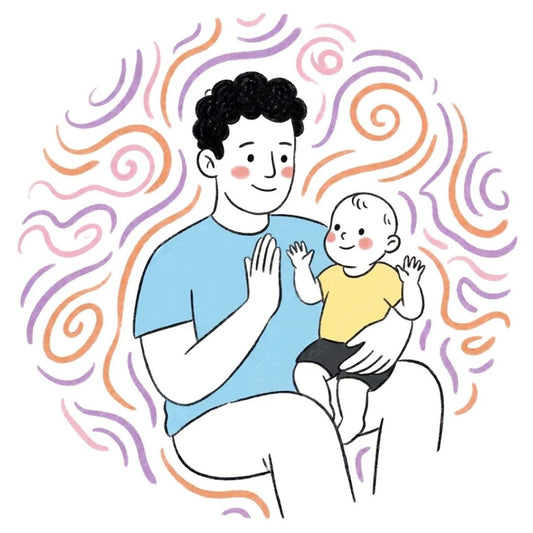
A sensitive period is a stretch of early childhood when a child feels a strong pull to practise one skill, again and again. This read explains how sensitive periods work in Montessori thinking, with a close look at the sensitive period of movement and why it matters for child development in the first six years.
Sobhana Menon, Principal of Eklavya School, has spent 27 years working with toddlers and teenagers. She spoke with Akriti Gupta, founder of Loopie, on The Parent Code episode "0 to 6 Years of Child Growth | Montessori Sensitive Periods". This read is for parents who want to understand the "why" behind a child's repeated actions and how to support them with ease.

What to Keep in Mind
-
Montessori sensitive periods 0-6 are a way of understanding how children learn. They are not a diagnosis, a test, or a deadline.
-
Children reach movement milestones at their own pace, and healthy windows are wide.
-
This is general information, not medical advice. For any worry about movement or development, a chat with your paediatrician is the right first step.

What Is a Sensitive Period in Montessori?
A sensitive period is, in Sobhana's words, "a phase in a child's growth and development that creates a natural urge to acquire a particular skill." The child practises it again and again without tiring, and often prefers no help. Maria Montessori described these phases across the first six years of life.
Akriti set the stakes at the start, "The first six years of a child's life are very important. I can't explain it enough or stress it enough, but our guest today can." She also introduced Sobhana as "a strong believer that every child has a natural genius waiting to be discovered, not installed."
Sobhana explained where that belief comes from: "Children have a very high innate ability to learn from their environment. They have a tremendous ability to emulate, imitate, and absorb what is happening in their environment."

The only thing adults need to do, she says, is give them the space and time to figure out what they want to discover.
Her first example: around three months, a baby may let out a giggle or a coo, and a parent rushes over to find the baby has turned over. She went on, "Who taught the baby to turn? It is the child's own innate ability. ... That innate teacher inside the child gives them the push to move and discover what happens."

Where the Idea Comes From
Montessori followed the work of scientist Hugo de Vries, who first described sensitive periods in animals. Sobhana shared his caterpillar example: newly hatched caterpillars are drawn towards light and the tender leaves on the outer branches, and once they have eaten enough, that pull fades and they seek darkness for the next stage.

Montessori wondered whether the same might be happening in children. The caterpillar is an analogy for the idea, not proof that children develop like insects.
When Akriti asked, "Is it something spiritual?" Sobhana's reply was, "I wouldn't call it just spiritual. It's a physiological and psychological change." When Akriti wondered if it was a belief system, the answer was short: "No, it's actually happening."

How Can Parents Spot a Sensitive Period?
Observing sensitive periods starts with noticing what a child keeps returning to. Look for a child who keeps repeating one action with deep focus. Sobhana calls it one of the most important markers: "the child repeatedly wants to practise a skill that has suddenly become possible for them."
Sensitive periods in toddlers and babies often look like this:
-
A baby who wants to turn over again and again, even while being dressed.
-
A toddler who keeps trying to walk, one wobbly step after another.
-
A preschooler who works on balancing on one leg or jumping a little higher each time.
Sobhana adds that these children "are hardworking and persistent, and they may not even want anyone to assist or interrupt them."

What Is the Sensitive Period of Movement?
Sobhana says the sensitive period of movement begins "even before a child is born, while they are still in the womb," and continues "until around six years of age." It covers much more than walking, from turning over and crawling to balancing, jumping, and using the hands.

Akriti admitted what many parents think: "We tend to think it is all about walking." Sobhana agreed, and widened the picture: "Movement isn't limited to gait or walking. There is also a great deal of development happening in the hands."

After birth, a baby gradually gains head control, turns over, sits, crawls, pulls up and walks. Sobhana suggests asking, "How well can a child balance on one leg? How high can they jump with both feet off the ground?"
Milestone ages show how wide healthy variation can be. The WHO Motor Development Study, which followed children in Ghana, India, Norway, Oman and the USA, recorded when children reached six gross motor milestones:
|
Milestone |
Window (months) |
|
Sitting without support |
3.8 to 9.2 |
|
Standing with assistance |
4.8 to 11.4 |
|
Hands-and-knees crawling |
5.2 to 13.5 |
|
Walking with assistance |
6.0 to 13.7 |
|
Standing alone |
6.9 to 16.9 |
|
Walking alone |
8.2 to 17.6 |
These windows reflect normal variation among healthy children. Walking alone, for example, spans more than nine months.

Why Do Babies Need Freedom to Move on the Floor?
Freedom to move lets babies practise a skill the moment their body is ready. As Sobhana puts it, "When babies move, they exercise their flexibility, develop gross motor control, and learn to lift their upper bodies." It also widens what they see and hear, which is why safe floor time matters.
Akriti raised swaddling: "We're trying to mimic the womb." Sobhana understands the comfort, noting that a wrapped baby can feel "almost as if someone is hugging them." Even so, she says, "swaddling should not continue indefinitely."
Restricting movement "can interfere with the opportunities babies have to move during the first three months, when they are developing skills such as turning over." The same goes for all-in-one outfits that cover hands and feet.

The American Academy of Pediatrics' swaddling guidance on HealthyChildren.org adds a clear cue: stop swaddling as soon as a baby shows any sign of trying to roll over, which some babies do from around two months. Swaddling for sleep has its own safety rules, so your paediatrician is the best guide there.
Free movement gives babies more than strength. Sobhana pointed to:
-
Flexibility and early gross motor control.
-
Vision, which starts at about six to twelve inches and gradually reaches farther.
-
Links between sounds, direction, and familiar people moving closer.
-
Recognising the smell of a caregiver, which helps a baby settle when picked up.

As Sobhana puts it, "it's very important to allow movement to happen without unnecessarily interrupting it." The American Academy of Pediatrics also advises limiting time in car seats, strollers, and bouncy seats, as too much time in confining equipment may delay motor skills. Regular floor time is a gentle way to balance things out.

Why Do Some Babies Skip Crawling?
Sobhana's answer is simple: "Most of the time, it happens because there isn't enough free space available." Without room to move on the floor, the urge to crawl may pass before it is fully used, and many healthy babies move on to standing.
Akriti has seen it among friends' babies: "I've noticed that a lot of children today don't seem to crawl. They move straight towards standing up."
Sobhana pointed to parents' worry about falls and long hours on the bed: "Crawling on a duvet or mattress isn't the same as crawling on the floor. There is less friction, and the surface behaves differently, making movement more difficult." From a Montessori view, skipping crawling often comes down to opportunity, not ability.

It also helps explain the leg-dragging Akriti has noticed. A baby who wants a toy but has not crawled much "might find another way to move, such as sitting on one knee and dragging the other leg."
The window is short: "Children may crawl for only a month or a month and a half before they begin pulling themselves up and standing." Why does it matter? In Sobhana's words, "When a child is crawling, they are developing bilateral coordination, which involves coordinating the limbs on both sides of the body." That is the importance of crawling in child development, as she sees it.
Once children walk, they stop practising that pattern in the same way. Cycling offers something similar, "but how often do we cycle? Many children get relatively few opportunities to do so." The WHO study also found that 4.3% of healthy children did not crawl on hands and knees at all.

What Happens When a Child's Urge to Move Is Blocked?
Children cannot work around a blocked urge the way adults do. In Sobhana's words, "That's when you may find a child becoming cranky or having meltdowns. They may resist what is happening because they cannot do what their inner urge is telling them to do."
Akriti wondered if a blocked urge can affect children emotionally, "almost as though something had been taken away from them." Sobhana said yes, and added a reminder for parents: "As a parent, you might not even realise that you're preventing the child from doing something that is naturally emerging at that stage of development."
None of this calls for guilt. It is a nudge to find a few more moments for free movement.

How Can Parents Prepare a Safe Space for Baby Movement?
A prepared environment means enough room to move and a setup that is safe to explore. Sobhana calls having enough space for movement extremely important. Her advice is to remain mindful and alert and remove genuine hazards. Time on the floor is not inherently dangerous, and being in contact with the ground can be a wonderful experience.

-
Offer open floor space where a baby can turn, crawl, and pull up.
-
Remove genuine choking hazards and dangerous objects.
-
Stay close and keep watching.
-
Choose clothing that leaves hands and feet free.

Sobhana also asked parents not to worry, with an example: "A pin can be very dangerous. But if a child picks up a tiny piece of dal, there's generally no need to panic over the fact that they've touched or picked it up."
For more ways to bring Montessori ideas home, our guide on Benefits of Montessori Learning: Montessori Toys & Tips for Parents is a good next read.

When Should Children Start Writing?
From a Montessori view, Sobhana's guidance is that "writing should come only around four and a half or five years of age." Before that, the wrist, elbow, and shoulder are still learning to work together, so pre-writing skills matter more. Starting early can bring strain and a dislike of writing.

Hand development in the Montessori view is a slow, steady build. At around one and a half, Sobhana says, "The wrist does one thing, the elbow does another, and the shoulder does something else." By three and a half to four and a half years, you begin to see much better coordination: "The hand starts moving as one unit." Even forming a circle, she adds, "requires coordinated hand movements."

Akriti described the usual scene, "asking them to write neatly between the lines before they are ready." Sobhana warned that "The child can develop a strong aversion to writing because it feels like such a strain."
So what helps? Sobhana answered, "We should focus on pre-writing skills and allow the sensitive period of coordination between the wrist, elbow, and shoulder to develop." Otherwise, she says, "we end up putting unnecessary pressure on the child."

India's National Education Policy 2020 also describes the early years as play-based, and NCERT's Vidya Pravesh is a three-month play-based school preparation module for children entering Grade 1.
Readiness matters more than speed. A child whose hands are ready tends to enjoy writing far more.
How Do Children Learn From Everyday Life?
Children learn a great deal by watching the people around them. In Sobhana's words, "They observe what is happening around them and pick up what they need to understand." Everyday moments, from a family meal to a trip to the shop, become lessons without formal teaching.

Akriti shared a moment from home: "She was eight and a half months old. I was both worried and very surprised. I wondered what would happen." Her daughter Rhea had picked up a jamun with a relatively large seed, put the fruit in her mouth, taken the seed out, and handed it to her.

Sobhana was not surprised, as she explains: "She's seen you eating fruit and removing the seed. When you put the fruit in your mouth, you take something out. She's observing that behaviour."
It is one family's experience, and a reminder that staying close at mealtimes always matters.

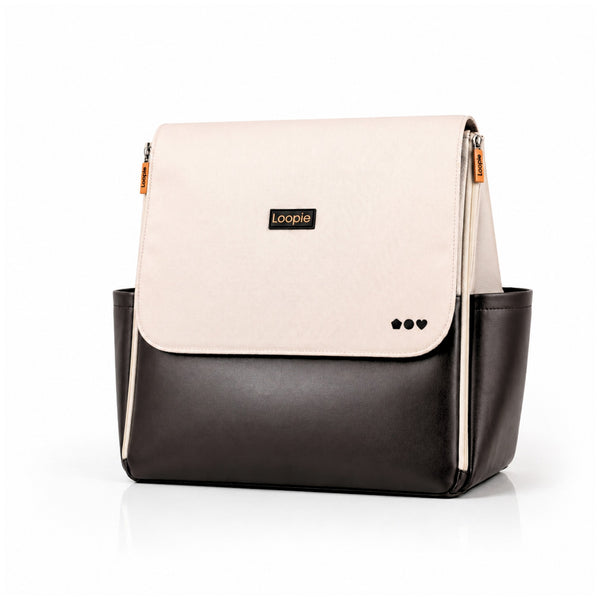
The payoff is worth it, Sobhana says, "When children get the opportunity to fulfil their urge to move, they can feel calmer and happier. There is a sense of joy in achieving something they wanted to do." Small things make slow walks easier too. A diaper bag that sits comfortably on the back, like the Loopie Robin, keeps both hands free for holding a little hand.

Outings teach grace and courtesy in everyday life, too. When a toddler in a food court picks something up and walks off, Sobhana says, "We can tell them that this is a shop, that we cannot simply take things, and that we need to ask for them. These everyday situations become opportunities to teach grace and courtesy."
Akriti knows it well: "I've seen Rhea pick things up and start walking away with them! Then I have to tell her, 'Okay, first, let's go to the counter.'"
Real moments matter because, as Sobhana puts it, "Not everything can be taught without the child experiencing the situation."
FAQs About Sensitive Periods in Children
What is meant by sensitive periods?
A sensitive period is a phase when a child feels a natural urge to master one particular skill. Sobhana says the child “repeatedly practises whatever is required to develop that skill” and does it “without getting tired.”
How long do sensitive periods last?
Sobhana says a sensitive period usually lasts a few weeks or a couple of months. Only rarely does one continue beyond two or three years, and timing differs from child to child.
How much tummy time does a baby need?
WHO's guidelines for children under five suggest at least 30 minutes of tummy time spread through the day while awake, for babies who are not yet mobile, plus interactive floor play several times a day.
Can parents speed up a sensitive period?
The urge comes from within the child. Sobhana's advice is to offer space and time to discover, rather than teach every skill. Observing closely is a good place to start.
Beauty of Sensitive Periods
Sensitive periods give parents a gentler way to read a child's repeated actions. In the sensitive period of movement, that means turning, crawling, walking, balancing and, in time, hands ready for writing. Across the first six years of child development, a child needs safe space, a little patience and room to practise.
Sobhana's message is simple: "Movement is very, very important, and we should not unnecessarily restrict it." Small changes, like more floor time, free hands and feet, and slower walks, go a long way.
Every child moves at their own pace, and a paediatrician is always there for any questions. Sometimes, helping a child grow means directing less and observing more.