Choosing your baby's first books doesn't have to be complicated. From soft cloth books they can touch and explore to wordless picture stories that leave room for imagination, this guide brings together 17 books to read with your baby from birth to 12 months.
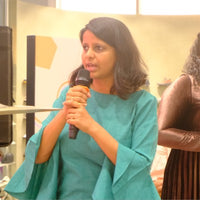
Curated by Akriti Gupta, Loopie's founder, the list draws on her experience reading to her daughter since pregnancy. Some books will be chewed, others ignored, and a few will become familiar favourites. That's all part of discovering books together.
Whether you're expecting or already have a baby, the books are grouped by what they offer, making it easier to find the right ones for each stage. Read on to explore the 17 books and find what might work best for your baby's first year.

When Should You Start Reading to a Baby?
From birth. The American Academy of Pediatrics' guide to sharing books with your baby recommends reading together from the newborn stage, because babies absorb the rhythm and tone of your voice long before they understand words. It also builds a cosy, familiar routine. A few minutes is enough.
Akriti shares that books were part of her routine well before birth. "I had been reading to her when she was inside my tummy. I was seven months pregnant when I started reading to my daughter."

Quick Guide to Books by Age
Every baby moves at their own pace, so treat this as an adaptable guide rather than a strict reading schedule. The right books are those that encourage your baby to look, listen, touch, and explore.
|
Stage |
What to look for |
Picks from this list |
|
0 to 6 months |
Cloth and contrast books, simple rhymes, bold and high-contrast pictures, simple illustrations and familiar voices. |
Dr. Seuss books, Usborne storybooks (For familiar voices) |
|
6 to 12 months |
Sturdy board books, textures, flaps, mirrors and pictures of familiar objects and animals. |
Skillmatics cloth book, Llama Llama, Wacky Magic Windows, animal books |
|
Any age |
Stories in your home language, wordless picture books and stories that leave room for interaction and imagination. |
Sabse Meetha Aam, Gajapati Kulapati, Ammachi's Glasses |
|
As Your Baby Grows |
Longer stories and books about emotions, relationships and everyday experiences that your child can appreciate as they grow. |
Little Miss, It's Okay Not to Be Okay, Looking After Hamsters, Potty Time |
Source: Adapted from age-based reading recommendations by the American Academy of Pediatrics (AAP) and the Health Service Executive (HSE), Ireland.
First Books
A baby's first books are less about following a story and more about discovering pictures, sounds, and textures. In the first six months, your voice matters more than the plot.
These are the best first books for little hands and eyes. In the first six months, your voice matters more than the plot. The AAP's guidance on choosing books for children and families points to rhymes, high-contrast pictures, and soft cloth books for this stage.

A soft cloth book with colourful illustrations and different textures for little hands to explore.
1. Skillmatics Peek-A-Boo! I See You!
Touch-and-feel books were the first Akriti introduced, and this soft cloth book was one of them. She started once her daughter could really start holding things, which was around two to three months, and kept three or four around so her little one could move things about. Flaps, crinkly pages, and movable animals make it a friendly pick among cloth books for babies.
Good for:
-
Exploring different textures and touch-and-feel elements.
-
Getting familiar with holding and interacting with books.
Buy here: Hamleys

A beautifully illustrated collection of classic Grimm's fairy tales, bringing magical characters to life.
2. Usborne Illustrated Grimm's Fairytales
Usborne has plenty of books with several stories in one, and a collection like this by Ruth Brocklehurst and Gillian Doherty makes a reading routine easy to start. Akriti read it the simple way: "I would take books like these and read one story at a time to her." It was part of her routine from early on, long before her daughter could follow a plot.
Good for:
-
Building an early read-aloud routine, one story at a time.
-
Introducing babies to stories through pictures and your voice.
Buy here: Books Wagon

An uplifting story about life's adventures, possibilities, and the exciting places a little one can go.
3. Oh, the Places You'll Go! by Dr. Seuss
This is Akriti's pick for the earliest days, and she calls it "one of my favourite books." This one particularly stands out for the way it talks about the different stages children go through in life. There will be times when they feel lonely and times when they find themselves surrounded by people. What makes these books suitable even for very young babies is their bright colours, large pictures, and very little text. As Akriti puts it, "You can use these kinds of books very early on, when your child is just listening to you, even at zero to three or four months."
Good for:
-
Early read-aloud sessions, even in the newborn months.
-
Bright illustrations and simple storytelling that parents will enjoy too.
Buy here: Amazon

A fun, rhyming story about a little boy who refuses to get out of bed, filled with Dr. Seuss's signature illustrations and humour.
4. I'm Not Going to Get Up Today! by Dr. Seuss
Akriti has eight or nine Seuss titles at home, and this is another favourite. "I absolutely love Dr. Seuss," she says. The rhymes are easy to read aloud in a silly voice, and the big, bright pictures give your baby plenty to look at while you do the talking.
Good for:
-
Introducing babies to the rhythm and sounds of language.
-
Making read-aloud sessions playful with different voices.
Buy here: Amazon

Animal Books
Animal books introduce babies to different animals, their names and the world around them. They can also become more engaging as babies begin pointing, touching pictures, and recognising familiar creatures.
Akriti shares that animal books came in once her daughter began touching books and working out what they were. Her approach was simple, as she explains, "We introduced animals in a very non-baby way, actually." Usborne has a series where each animal gets its own book, plus titles on countries, ships, and pirates.

An engaging picture book that introduces little readers to penguins through colourful illustrations and details.
5. Usborne Penguins
This is Akriti's pick for animal books. It shows what a penguin is, what its wings look like, how penguins huddle together, and how they swim. There is plenty to point at. "There was interaction in terms of looking at the pictures, sometimes picking at the pages and exploring them," she shares. One picture can also carry a long chat, like the baby penguin her daughter kept talking about. The same series has a spider book too.
Good for:
-
Introducing animals and helping little ones explore the world around them.
-
Pointing, identifying, and talking about different things in a picture.
Buy here: Amazon

A child-friendly guide to caring for hamsters, introducing little ones to pet care and the responsibilities that come with looking after an animal.
6. Looking After Hamsters by Susan Meredith
Part of the Usborne Pet Guides series, this book introduces children to what goes into looking after a hamster. It shows how to set up a hamster's home, what its cage looks like, and the different areas it needs for eating, sleeping, and even pooping.
Akriti found these details interesting because they connect with things her daughter was already learning about in everyday life. She would point to the pictures and say things like, "This is a hamster, and we are giving food to the hamster." From understanding what an animal eats to how it sleeps and where it lives, there's plenty to talk about together.
Good for:
-
Introducing animals and the basics of caring for them.
-
Connecting everyday routines like eating, sleeping, and feeding with pictures.
Buy here: Amazon

If you're looking for more reading recommendations beyond books for your baby, explore our guide to the best parenting books for first-time parents, covering everything from feeding and sleep to understanding your newborn.
Interactive Books
Interactive books give babies something to do as they read. With flaps to lift, windows to peek through and pieces to explore, they make reading feel more like play. Flaps, windows, and pieces turn reading into a game.
The AAP's age-by-age tips note that babies from about nine months like to explore flaps and mirrors. Akriti found that "a lot of these early interactive books also got her very interested in books in general."

Each page features a removable puzzle piece that little ones can take out and fit back into place.
7. My Cute Little Puzzle Book by Yoyo Books
Akriti also introduced her daughter to simple puzzle books that allowed her to interact with the pages. In this book, she could take out a butterfly or a bunny and then try to fit it back into its place.

As Akriti explains, her daughter knew that this book wasn't really meant for reading. She would simply open it, take out a puzzle piece, and try to put it back. These little activities made the book interactive while also allowing her to practise her motor skills.
The idea wasn't to get her to read the book, but to let her explore it through play.
Good for:
-
Practising fine motor skills through simple puzzle pieces.
-
Exploring shapes, matching, and putting things back in place.
Buy here: Amazon

Open a window and watch the picture change. A yellow lion might turn into a purple octopus, making every page a fun little surprise.
8. Wacky Magic Windows: Colors by Little Genius Books
Akriti also talks about another interactive picture book that her daughter enjoyed. On one page, you see a yellow lion, but when you open the window, it transforms into a purple octopus. The changing pictures make every page interesting for a little one to explore.

As Akriti puts it, "Each and every page, she would find interesting to interact with." It's this element of surprise and discovery that made the book so engaging for her daughter.
Good for:
-
Exploring colours and different objects through changing pictures.
-
Encouraging curiosity through interactive surprises.
Buy here: Amazon

A playful lift-the-flap book that turns reading into a game of hide-and-seek, with surprises behind each flap.
9. Llama Llama Hide & Seek: A Lift-the-Flap Book by Anna Dewdney
A friend in the US sent Akriti this book, and it has quickly become a favourite. Part of the much-loved Llama Llama series, this is a lift-the-flap book that her daughter took to quite intuitively. Akriti was particularly impressed by how thoughtfully the flaps are placed. Her daughter knew exactly where and how to lift them, without needing much guidance.
As Akriti puts it, the makers seem to have put a lot of thought into how a child thinks, operates, and sees things. She highly recommends the Llama Llama series, especially if you're looking to introduce your baby to lift-the-flap books.
Good for:
-
Introducing lift-the-flap books and peek-a-boo play.
-
Encouraging little ones to explore pages independently.
Buy here: Amazon
Books for Emotional Development & Everyday Life
These books introduce babies to feelings, emotions and everyday behaviour through stories, pictures and familiar situations.
Babies will not follow the plot yet, but they do pick up tone and faces. "It's not that a child of six or nine months will understand all of this," Akriti says, "but it's a good storytelling format to talk to them about different kinds of behaviour." That makes these useful books for baby feelings and emotions, and they are best seen as grow-into reads. Grow-into reads are the ones where the baby enjoys the books through pictures and your voice, but understands them later.

A collection of 36 short stories featuring different Little Miss characters, each with their own personality, quirks and ways of looking at the world.
10. Little Miss: My Complete Collection by Roger and Adam Hargreaves
Akriti recommends the Little Miss and Little Mister collections; each book is centred around a particular feeling or behaviour. Some parts include Little Miss Stubborn and Little Miss Helpful.
Each story follows a character with a particular trait and explores what happens along their journey. Your baby may not understand the behaviour or the story at six or nine months, but, as Akriti explains, it's a good storytelling format to start talking about different kinds of feelings and behaviour from early on.
Good for:
-
Introducing different feelings and behaviours through characters.
-
Starting conversations about emotions through simple stories.
Buy here: Amazon

A gentle picture book that introduces children to different emotions and reminds them that it's okay to experience difficult feelings.
11. It's Okay Not to Be Okay by Sarah Allen
Published by Wonder House Books, this is another feelings-focused book in Akriti's collection. It offers a simple, relatable way to introduce emotions and help little ones understand that it's okay to have difficult days. It's also a lovely starting point for parents to talk about feelings with their babies, even before they fully understand the words.
Good for:
-
Introducing babies to different emotions and feelings.
-
Creating opportunities to talk about difficult days in a simple way.
Buy here: Amazon

An interactive board book that introduces toddlers to potty training through simple illustrations and activities.
12. Potty Time (Yes, I Can!) by Evgenia Golubeva
Akriti started talking about potty training when her daughter was around one year old. Sharing her approach, she says, "Whenever we had to introduce a new life skill to her, we would generally do it through storytelling and books." Reading it once a day, or every other day, made the whole routine more fun. It is a handy pick among potty training books for a 1-year-old.
Good for:
-
Introducing potty training through storytelling.
-
Making new routines more familiar around the one-year mark.
Buy here: Amazon
Want to understand how books can engage your baby's senses? Read our guide to sensory books and their role in early development for more on their benefits, when to introduce them, and which ones to explore.
Storybooks
Storybooks introduce babies to language, characters and everyday experiences through simple stories and pictures. They can also be a lovely way to bring the languages spoken at home into reading time.
At home, Akriti speaks mostly Hindi with some English, and she says, "I try to make sure that we have books in all the languages we practise at home." The effect is clear. "I've noticed that she actually resonates more with Hindi books," she says about her daughter. The AAP also encourages reading in the language that feels most comfortable to you, which makes Hindi books for babies a lovely place to start.

A colourful Hindi picture book that brings the joy of storytelling in a familiar language, making it a lovely addition to a child's reading shelf.
13. Sabse Meetha Aam by Malavika Shetty
A Hindi picture book about Suma and her mango. Mangoes are one of Akriti's daughter's favourite fruits, so she knows exactly what the book is about. Her favourite page is the one where Suma is crying, and she always takes her parents there to say, "Suma is crying. Suma is sad." It works for a simple reason, Akriti says: "It's very easy to understand, easy to explain, and relatable for children because these are things that you're using at home."
Good for:
-
Building familiarity with the language spoken at home.
-
Connecting everyday experiences, favourite foods and emotions through stories.
Buy here: Amazon

A fun, rhythmic story featuring Gajapati Kulapati, with playful sounds, repetition and expressive illustrations.
14. Gajapati Kulapati: Gurrburrrrooom! by Ashok Rajagopalan
Although this is an English book, Akriti reads it to her daughter in Hindi. As she explains, having books in different languages doesn't necessarily mean you have to read them in the language they're written in. You can use the pictures and tell the story in the language your child is most familiar with.
It's another example of how you can make reading a part of your everyday conversations, without restricting yourself to books written in a particular language.
Good for:
-
Reading together in the language your child is most comfortable with.
-
Making storytelling more familiar and engaging through pictures.
Buy here: Amazon

A wordless picture book about a granny whose glasses are taken away by a crow.
15. Ammachi's Glasses by Priya Kuriyan
This is one of Akriti's favourite books, and for a rather interesting reason: it has absolutely no text. Ammachi's Glasses follows a grandmother who has lost her spectacles, which have actually been taken by a crow. The entire story unfolds through illustrations.
What Akriti loves most is that you can create your own story every time you open the book. The setting is very familiar, almost like looking at someone's actual home, and the illustrations leave plenty of room for imagination.
Akriti also shares that her daughter's nanny reads it with great enthusiasm, and her daughter also picks it up on her own, sits down, and tries to narrate the story in her own words. Nanny-friendly books also come useful in homes where both parents are working and they are important as well.
That's the beauty of a wordless picture book: everyone can tell the story in their own way.
Good for:
-
Encouraging imagination and storytelling through illustrations.
-
Letting parents, caregivers, and children create their own versions of a story.
Buy here: Amazon
Culture and Spirituality Books
Books can also introduce babies to the traditions, beliefs, and cultural practices that are part of family life. These may include stories from mythology, religious books, spiritual ideas, or simple introductions to festivals and customs.
Beyond stories, some families want books that reflect their traditions. Akriti mixes it up: "It could be religion, spirituality, or anything else."

An illustrated introduction to traditional shlokas and mantras, helping children become familiar with these verses.
16. Shlokas and Mantras for Kids by Wonder House Books
This is one of the books Akriti uses to introduce her daughter to shlokas and mantras. She enjoys practising them together, and interestingly, the process has also helped her practise and remember the shlokas herself.
She mentions that shlokas are now taught to children in many preschool and daycare settings as well. It's one way of gradually introducing little ones to familiar verses and sounds through everyday practice.
Good for:
-
Introducing shlokas and mantras through repetition.
-
Making familiar family and cultural practices part of everyday reading.
Buy here: Amazon

A child-friendly retelling of the Nativity story, introducing little readers to the story of Jesus's birth through illustrations and simple storytelling.
17. My First Bible Stories: The Nativity by Charlotte Guillain
Illustrated by Lesley Grainger, this is another book in Akriti's collection. Alongside introducing her daughter to shlokas and mantras, she also wants her to become familiar with different religions, cultures, and traditions.
As Akriti puts it, she would like to introduce her daughter to all kinds of cultures and religions. This book is one way of bringing those stories into their reading routine.
Good for:
-
Introducing children to stories from different religions and traditions.
-
Building familiarity with different cultures through books.
Buy here: Amazon

How to Read to a Baby Who Won't Sit Still
Follow your baby's lead. The AAP guide suggests naming the pictures your baby touches, helping with page turns, and expecting plenty of repeats, since babies love the same book again and again. You never need to finish a story. Mouthing books is normal too, so sturdy board books and soft fabric books work best.
FAQs: Parents' Most Asked Questions on Books
What are the best books to read to a newborn?
Look for bold pictures, simple rhymes, and soft cloth books, then let your voice do the rest. Akriti points to Dr. Seuss books, which work from the very first months.
Are board books or cloth books better than paper books?
For babies who grab and mouth books, sturdy board or soft cloth books last longer. The AAP recommends them for 7 to 12 months. Paper pages tear easily, so keep those for reading together.
What are grow-into books?
These are books a baby enjoys through pictures and your voice now, and understands later. Little Miss, Looking After Hamsters and Potty Time are good examples.
When should parents start reading books to their baby?
Parents can start reading to their baby from birth. Even though newborns may not understand words or follow stories, listening to a parent's voice, looking at pictures, and sharing reading time helps build early language skills, listening abilities, and a positive association with books.
When can babies use lift-the-flap books?
The lift-the-flap books are good picks for 7 to 12 months, great for peek-a-boo. Read them together, since flaps can tear.
Start With What Feels Right
You don't have to get everything. Start with a few books that offer your baby different things to explore, from colourful pictures and animal stories to interactive pages and books in your home language.
Choose what feels right for your family. Read together, revisit favourite pages, and let your little one explore at their own pace.
As Akriti's bookshelf shows, a baby's reading collection can be wonderfully varied. At this age, reading isn't just about understanding stories. It's about listening to your voice, looking at pictures, exploring pages, and sharing little moments.